


Using the tools of science and psychology to deepen your spiritual growth.
Please Note: These newsletters are meant to be read in order.
70: An (even more seriously revised) Pivot Into Depth
WHAT THIS NEWSLETTER OFFERS
After reading Inside the Invisible for a while, you will begin to notice a quiet
groundedness beneath the noise of daily life — greater calm, clarity, and a
growing awareness of God in ordinary moments. This newsletter will not give
you new beliefs. It will help you see with new eyes.
Okay, okay! I’m sorry that I keep doing this to you, but this is the last time – I swear it! But the longer I keep fooling around with the outline for our upcoming series, the more it changes. I realize – after the fact, of course – that I should add this, and I forgot to include that and on and on and on. What can I say? This new ‘new series’ has now expanded from 22 to 27 issues and includes a lot of really great new stuff. Some comes from Zilvinas, my Lithuanian friend and a bunch comes from me. But, no matter what, (assuming, of course, that the creek don’t rise) we will start the new series next week. To mark the new content, it even has a new name,
Who Am I?
An Exploration of Identity, Consciousness, and Being.
The central question of the series deals with the central question in our lives: Who are we — really? Beneath the roles we play, the opinions we hold, the identity we have constructed and defended our entire lives — what is actually there? This series takes that question seriously, not as a philosophical puzzle, but as the most practical inquiry a human being can undertake. The answer — which 27 issues will approach from every possible direction — is that the self we take ourselves to be is not the deepest thing we are. And discovering what lies beneath it changes everything.
The Arc We Will Explore
Part I (Issues 1–6): The Ego — What It Is and How It Got Here
We begin where readers actually are: inside the ego. We examine how the self was constructed, what needs it serves, and why — despite its genuine usefulness in social life — it ultimately becomes the primary obstacle to deeper, more spiritual development.
Part II (Issues 7–12): The Two Selves — Individual and Collective
Drawing on the notion of a collective WE, we examine the dual nature of human identity: the individual ego self and the group self. While we are very familiar with our individual selves, we forget that we need each other to survive. We show how both selves operate, how they conflict, and how understanding the group self opens a door the ego alone cannot find.
Part III (Issues 13–20): Consciousness — The Nature of Awareness
Here we move from our constructed self to the awareness that observes it. Drawing on Christian mysticism, pre-Nicene sources, and parallel insights from Hindu and Buddhist traditions, we will examine what consciousness is, what it reveals, and how it becomes the vehicle for paradigm shift.
Part IV (Issues 21–27): Being — The Shift from Ego to Divine Consciousness
The series arrives at its destination: the paradigm shift from egoic consciousness to Being. Here we will explore some of the deepest understandings of Christianity – that we participate in the Divine. We document what this shift looks like, how it is entered, and what it means to live from a different center — practically, relationally, and spiritually.
How the Newsletter Relates to the Web-based Intensive Program
This newsletter series is a structured but accessible exploration of the terrain that will be covered in the intensive program at www.insidetheinvisible.com. Newsletter readers will receive the ideas, the historical and spiritual context, and gentle introductory practices. The intensive program is where those same ideas are worked at depth — with daily practice requirements, behavioral tracking, teacher review, and a sequenced curriculum that takes the reader through the same territory with full rigor. Each newsletter issue will contain an invitation to the intensive for readers who want to go deeper. The newsletter will give the map. The intensive will show you the steps you need to take to make the journey.
Recurring Elements in Every Issue
The Core Essay: each issue will have a central thought-piece exploring the issue's central question with theological depth, accessible language, and concrete illustration. Written for the spiritually curious reader with no assumed theological training.
A Practical Exercise: One simple, doable practice drawn from the contemplative traditions — breath awareness, a brief meditation, a journaling prompt, a behavioral experiment. Low threshold so that the exercises are easy to start and do. High leverage for the effort you will put into them.
Video Gathering Invitation: Each issue will invite readers to a live video gathering for Q&A and group meditation on that issue's theme. When we launch this, our video gatherings will start monthly and progress from there. This will give us time to practice together and to ask questions about your individual spiritual work.
As it has been in the past, these issues are designed to be read in sequence, and we will create an archive link for past issues.
To figure out the best day and time for our monthly video sessions, I have added a response form at the bottom of this newsletter so you can tell me when would be the best day/time for our video chats. If you would like to be part of our video discussions, please take a minute to respond to our questionnaire. We will use Google Meet to gather, and we will be including a link with the newsletter so that we can join together.
* * *
In addition to this new newsletter course, we will soon begin beta testing our new website, www.insidetheinvisible.com. As I said last week, this website is a monster – just stunning in its depth and breadth. It will provide step-by-step instruction on the specific behavioral changes necessary to achieve mystical union with God. This website will offer something that has never been available before – an instructional system for deepening our spiritual life based on empirical research – research that includes all of the major spiritual traditions.
This website will require a paid subscription, but we are deliberately keeping the price as low as possible. The folks who beta test this site for us will receive two benefits. First, they will get to preview the first group of stages. That will help them decide if they want to take the course, and it will also help us fix the glitches before we release it to the public. Second, they will each receive a free six-month subscription to the site.
The last change coming is a new book I have written titled, The Invisible Life Within. This book is a very personal record of the arc of the spiritual journey as seen through the lens of my life experiences. It is an attempt to put a human face on the spiritual journey, showing what it looks like from the inside. I just sent off query letters and proposals to three publishing houses that handle books like this, and I hope to hear from them in the next couple of months.
* * *
Well, that’s all for this week. Please take a moment and fill in the questionnaire below and return it to ken@insidetheinvisible.com. Do it now before you forget.
What times would work best for your participation?
Login or Subscribe to participate in polls.
I hope you have a splendid week and I look forward to continuing our time together in our next newsletter series.
May God make his face to shine upon you, this day, and always!
FROM THE AUTHOR
Inside the Invisible: The Universal Path to Spiritual
Transcendence
Are you looking for clarity in difficult times? Longing for a deeper sense of
purpose and meaning? This book is for you.
KNOW SOMEONE WHO'D VALUE THIS?
If this issue moved you, consider forwarding it to one person whose inner life
you respect. Send their email address to:
69: A (somewhat revised) Pivot Into Depth
WHAT THIS NEWSLETTER OFFERS
After reading Inside the Invisible for a while, you will begin to notice a quiet
groundedness beneath the noise of daily life — greater calm, clarity, and a
growing awareness of God in ordinary moments. This newsletter will not give
you new beliefs. It will help you see with new eyes.
I am well known by my family and friends as a technological idiot! In my defense, technology is not my native language, and it changes too quickly for an old guy like me to keep up. That said, my apologies for several blunders last week.
We are trying to change our newsletter format and content. There are almost 12,000 of us now, and it seems appropriate to mark the occasion by using this forum for a sustained course that will result in genuine spiritual transformation. Hence the ‘pivot’ part. To this end, I wanted to add monthly video Q&A sessions, but I forgot to add the response form at the bottom so you could tell me when would be the best day/time for our video work. My apologies for that. If you would like to be part of our video discussions, please take a minute at the end to respond to our questionnaire.
To get a clear sense of when most of you could be available, we will send this newsletter (slightly modified) next week as well. Just respond once, please.
With some 60+ pieces of the spiritual puzzle lying in front of me, I am beginning to discern clear patterns that pertain to the spiritual dimension of life. These elements have always been there, and the arc that connects them has always been present. I, however, have been unable to see these patterns until just recently. If you will, the noise has been obscuring the signal.
What do I mean by noise? It’s the same noise that you face as well, every single day. The voice in our heads – the constant self-talk – the repetitious blather that judges and critiques and compares and is always, always talking. As I have been watching it, I have come to realize that most of our self-talk is simply a way we entertain ourselves. It serves little or no constructive purpose.
In fact, when you look closely, the constant noise has a hidden destructive purpose. The noise keeps us from seeing the Reality underneath. It keeps us so busy and so occupied with the trivial that we cannot see what is Real.
You can see this for yourself if you just take a moment to look. For those who go to church or synagogue or mosque, you’re going there to have a moment with the Divine. So how much time do you actually spend with God, and how much time are you chatting with your neighbor, critiquing what somebody over there is doing, or listening to your own inner chatter?
Or maybe you don’t go to a worship service these days, but you spend time in prayer. Notice what happens there. You close your eyes and go inside and perhaps you give thanks for the good things that have happened in your life, and perhaps you ask God for some special help – either for yourself or for someone you care about. The rest of the time you’re thinking about things that have nothing to do with God. Things like, “I need to remember to get some milk and bread for breakfast tomorrow. I need to do X, Y, and Z”. Yada yada yada.
Does any of this actually help you remember to do X, Y, or Z? I can’t answer for you but I know for myself these so-called “reminder thoughts,” are just hogwash! They don’t help. They do, however, take my attention away from my devotion to God. In that way, they are destructive. Worse, they all grab my attention by masquerading as something constructive. They masquerade as time spent with God when in fact only five or 10% of the time is spent how I intend.
This is nuts!
My goal, in the remaining years of my life, is to draw as closely to God as possible. You, my reader, have helped me in this quest, and I thank you. Taking on the discipline of writing for you every week has helped me keep my focus on the main goal. Going forward, I want to sharpen that focus even more. I hope you want this for yourself as well.
To that end, I’m going to organize the parts I’ve been developing in these newsletters into a coherent teaching framework. I want to sharpen our focus in this way so that we: 1) recognize our true nature more clearly, 2) connect more deeply with each other, and 3) connect more deeply with the Divine.
I have an even deeper purpose behind all of this, even though I know it is out of my reach. I hope, as we connect more deeply with God and with each other, that we find our hearts opening in love – a love that is much deeper than that which we now know.
* * *
Western culture has reached an inflection point – and it’s a dangerous juncture. We have forgotten the caring social structure which undergirds our apparent differences. We have divided ourselves and we have begun to hate those who are not like us. While this reflects a dark side in our human nature, if it’s not addressed and remedied, it could be the death of us all. On balance, our cultural descent into strife, hatred, cruelty, and destruction is not something I want to participate in.
So here is what is going to change going forward. I’m going to write longer newsletter sequences to explore our spiritual life more deeply. Coming up next is a series titled, “Who Do You Think You Are?” This will be an extended exploration focusing on our identity, our sense of self, and the Divine deep within each of us. It is designed as a teaching series and its purpose is to transform our spiritual life.
Now there’s one thing about any kind of transformation that is critically important to understand at the outset. Every transformation, in fact every movement of any kind, has friction. Friction makes us uncomfortable, but we cannot grow and develop without it. This newsletter course is now going to ask something of you. It will ask you to look deeply within, and it will invite you to change those things that don’t further your spiritual life.
To support you as you work through this course, I plan to have video Q&A sessions monthly. I will do my best to answer your questions as we go through this process together. One caveat: I’m not interested in debating theology in these sessions and I plan to shut down that kind of talk when it occurs. On the other hand, I am very interested in helping you work through the questions and experiences you will have as the course develops.
To that end, I need feedback about when to schedule these video sessions. At the end of this newsletter, you’ll find a brief questionnaire addressing this issue. Based on your responses, I will be looking for a day and time where we can accommodate the most participants. We will use Google Meet for this and there will be a link and instructions on using it in the weekly newsletters you receive so that you can participate.
In addition to this new newsletter course, we will begin very soon now to beta test our new website, www.insidetheinvisible.com. This website is a monster – just stunning in its depth and breadth. It will provide step-by-step instruction on the specific behavioral changes necessary to achieve mystical union with God. As a result, this instruction goes very deep and you find it produces a lot of friction. That said, this website will offer something that has never been available before – an instructional system based on empirical research that includes all of the major spiritual traditions.
By collecting data from all of the major spiritual traditions, a clear pattern has emerged. The emergence of this pattern is a major breakthrough for spiritual seekers. It shows each step we must take and, more importantly, the specific reason for each step. Up to this point, the bottleneck constricting spiritual formation has been the lack of qualified teachers – teachers who have themselves achieved union with the Real. By collating these data together, this research has begun to demystify the spiritual path.
That is not to say that we demystify the Mystery! The mystery remains and will always remain. This collation, however, allows us a much deeper understanding of the path that leads to our transformation.
This website will require a paid subscription, but we are deliberately keeping the price as low as possible. The folks who beta test this site for us will receive two benefits. First, they will get to preview the first group of stages. That will help them decide if they want to take the course, and it will also help us fix the glitches before we release it to the public. Second, they will each receive a free six-month subscription to the site.
The last change coming is a new book I have written titled, The Invisible Life Within. This book is a very personal record of the arc of the spiritual journey as seen through the lens of my life experiences. It is an attempt to put a human face on the spiritual journey, showing what it looks like from the inside. Writing the book took me to some very deep and surprising places, and I think you’ll find it interesting and, I hope, useful in your own journey.
* * *
Well, that’s all for this week. Please take a moment and fill in the questionnaire below and return it to ken@insidetheinvisible.com. Do it now before you forget.
What times would work best for your participation?
Login or Subscribe to participate in polls.
I hope you have a splendid week. I look forward to continuing our time
together in the next issue.
May God make his face to shine upon you, this day, and always.
FROM THE AUTHOR
Inside the Invisible: The Universal Path to Spiritual
Transcendence
Are you looking for clarity in difficult times? Longing for a deeper sense of
purpose and meaning? This book is for you.
KNOW SOMEONE WHO'D VALUE THIS?
If this issue moved you, consider forwarding it to one person whose inner life
you respect. Send their email address to:
68: A Pivot Into Depth
I have two requests. First, please send a donation help cover the expense of setting up a new website using the link: Donations
Second, please send us the email addresses for one of your friends who might enjoy our newsletter to: ken@insidetheinvisible.com
This week and next will mark a major shift in our time together. I have been writing this newsletter for a year and a half, and it has been a fascinating experience. It has pushed me to integrate my theological knowledge with the knowledge I have gained as a clinical psychologist. All of this has converged to illuminate the spiritual journey we have been on together.
Each week, with what often seemed like a random selection, I chose a topic to explore. I’ve never had an overarching theme; it has been more like an exploration of this particular idea or some other. Every now and again I would find several newsletters connecting with each other, but it was rarely intentional.
Now, with some 67 pieces of the puzzle lying in full view in front of me, I am beginning to discern clear patterns that pertain to the spiritual dimension of life. These elements have always been there, and the arc that connects them has always been present. I, however, have been unable to see these patterns until just recently. If you will, the noise has been obscuring the signal.
What do I mean by noise? It’s the same noise that you face as well, every single day. The voice in our heads – the constant self-talk – the repetitious blather that judges and critiques and compares and is always, always talking. As I have been watching it, I have come to realize that most of our self-talk is simply a way we entertain ourselves. It serves little or no constructive purpose.
In fact, when you look closely, the constant noise has a hidden destructive purpose. The noise keeps us from seeing the Reality underneath. It keeps us so busy and so occupied with the trivial that we cannot see what is Real.
You can see this for yourself if you just take a moment to look. For those who go to church or synagogue or mosque, you’re going there to have a moment with the Divine. So how much time do you actually spend with God, and how much time are you chatting with your neighbor, critiquing what somebody over there is doing, or listening to your own inner chatter?
Or maybe you don’t go to a worship service these days, but you spend time in prayer. Notice what happens there. You close your eyes and go inside and perhaps you give thanks for the good things that have happened in your life, and perhaps you ask God for some special help – either for yourself or for someone you care about. The rest of the time you’re thinking about things that have nothing to do with God. Things like, “I need to remember to get some milk and bread for breakfast tomorrow. I need to do X,Y and Z”. Yada yada yada.
Does any of this actually help you remember to do X, Y or Z? I can’t answer for you but I know for myself these so-called “reminder thoughts,” are just hogwash! They don’t help. They do, however, take my attention away from my devotion to God. In that way, they are destructive. Worse, they all grab my attention by masquerading as something constructive. They masquerade as time spent with God when in fact only five or 10% of the time is spent how I intend.
This is nuts!
My goal, in the remaining years of my life, is to draw as closely to God as possible. You, my reader, have helped me in this quest, and I thank you. Taking on the discipline of writing for you every week has helped me keep my focus on the main goal. Going forward, I want to sharpen that focus even more. I hope you want this for yourself as well.
To that end, I’m going to organize the parts I’ve been developing in these newsletters into a coherent teaching framework. I want to sharpen our focus in this way so that we: 1) recognize our true nature more clearly, 2) connect more deeply with each other, and 3) connect more deeply with the Divine.
I have an even deeper purpose behind all of this, even though I know it is out of my reach. I hope, as we connect more deeply with God and with each other, that we find our hearts opening in love – a love that is much deeper than that which we now know.
* * *
Western culture has reached an inflection point – and it’s a dangerous juncture. We have forgotten the caring social structure which undergirds our apparent differences. We have divided ourselves and we have begun to hate those who are not like us. While this reflects a dark side in our human nature, if it’s not addressed and remedied, it could be the death of us all. On balance, our cultural descent into strife, hatred, cruelty, and destruction is not something I want to participate in.
So here is what is going to change going forward. I’m going to write longer newsletter sequences to explore our spiritual life more deeply. Coming up next is a series titled, “Who Do You Think You Are?” This will be an extended exploration focusing on our identity, our sense of self, and the Divine deep within each of us. It is designed as a teaching series and its purpose is to transform our spiritual life.
Now there’s one thing about any kind of transformation that is critically important to understand at the outset. Every transformation, in fact every movement of any kind, has friction. Friction makes us uncomfortable, but we cannot grow and develop without it. This newsletter course is now going to ask something of you. It will ask you to look deeply within, and it will invite you to change those things that don’t further your spiritual life.
To support you as you work through this course, I plan to have video Q&A sessions monthly. I will do my best to answer your questions as we go through this process together. One caveat: I’m not interested in debating theology in these sessions and I plan to shut down that kind of talk when it occurs. On the other hand, I am very interested in helping you work through the questions and experiences you will have as the course develops.
To that end, I need feedback about when to schedule these video sessions. At the end of this newsletter, you’ll find a brief questionnaire addressing this issue. Based on your responses, I will be looking for a day and time where we can accommodate the most participants. We will use Google Meet for this and there will be a link and instructions on using it in the weekly newsletters you receive so that you can participate.
In addition to this new newsletter course, we will begin very soon now to beta test our new website, www.insidetheinvisible.com. This website is a monster – just stunning in its depth and breadth. It will provide step-by-step instruction on the specific behavioral changes necessary to achieve mystical union with God. This website will offer something that has never been available before – an instructional system based on empirical research that includes all of the major spiritual traditions.
By collecting data from all of the major spiritual traditions, a clear pattern has emerged. The emergence of this pattern is a major breakthrough for spiritual seekers. It shows each step we must take and, more importantly, the specific reason for each step. Up to this point, the bottleneck constricting spiritual formation has been the lack of qualified teachers – teachers who have themselves achieved union with the Real. By collating these data together, this research has begun to demystify the spiritual path.
That is not to say that we demystify the Mystery! The mystery remains and will always remain. This collation, however, allows us a much deeper understanding of the path that leads to our transformation.
This website will require a paid subscription, but we are deliberately keeping the price as low as possible. The folks who beta test this site for us will receive two benefits. First, they will get to preview the first group of stages. That will help them decide if they want to take the course, and it will also help us fix the glitches before we release it to the public. Second, they will each receive a free six-month subscription to the site.
The last change coming is a new book I have written titled, The Invisible Life Within. This book is a very personal record of the arc of the spiritual journey as seen through
h the lens of my life experiences. It is an attempt to put a human face on the spiritual journey, showing what it looks like from the inside. Writing the book took me to some very deep and surprising places, and I think you’ll find it interesting and, I hope, useful in your own journey.
* * *
Well, that’s all for this week. Please take a moment and fill in the questionnaire below and return it to ken@insidetheinvisible.com. Do it now before you forget.
I hope you have a splendid week and I look forward to continuing our time together in the next newsletter.
May God make his face to shine upon you, this day, and always!
What Invisible Offers
After reading Invisible for a short while, you will begin to notice:
A quiet groundedness beneath the noise of daily life
Greater calm, clarity, and inner freedom arising from within
A growing awareness of God in ordinary moments
Language for truths you have long sensed but never named
A gentle opening of the heart – free from dogma or pressure
Invisible will not give you new beliefs.
It will help you see with new eyes.
P.S. These newsletters were written in a particular order, but due to the limitations of our email delivery system, we cannot send them in the order in which they were written. We can send out the first five in order, but then the system sends out the next one, whatever that happens to be.
So, if you are suddenly moving from issue #5 to issue #whatever, it might be a little jarring. If this sounds like you, I would encourage you to go back into our archives and do your best to read them in order.
Humility as a Tool → Letting go → Fear → Openness → Acceptance & Growth
If you are finding this newsletter course helpful, you may want to consider Dr. Kaisch's latest book, Inside the Invisible: The Universal Path to Spiritual Transcendence.👇
https://www.amazon.com/dp/B0DSV9XQSC
To access the other newsletter editions of the “Inside The Invisible Newsletter,” or if you’d like to read ahead or go back.
Read Other Newsletter Editions Here!
Please Note: These newsletters are meant to be read in order.
67: The Purpose of the Spiritual Life
I have two requests. First, please send a donation help cover the expense of setting up a new website using the link: Donations
Second, please send us the email addresses for one of your friends who might enjoy our newsletter to: ken@insidetheinvisible.com
I am greatly indebted to Father Mark Hall for his contributions to this article. My conversations with him over the past weeks have greatly benefited me and clarified my understanding of these matters.
The purpose of the Church and the purpose of the spiritual life is to connect people with the Real. This notion has several dimensions. First, in more conventional terms, the purpose of the Church is to connect people with God. I have always been intrigued by the many names that Muslims have for God. One of the more fascinating names for God is the Real. God is clearly understood here as the ultimate reality. The Divine is that upon which all else depends – namely, the Real. Again, in the conventional sense, the purpose of the spiritual life is to connect us with God.
A second dimension, implicit in the first, is that the purpose of the spiritual life is to connect us with our deepest self – the incarnation of the Real. This is the self that we intuitively sense; that deeper self we ‘feel’ but can never quite put words to.
This is the self that God created. The self we are before we start constructing the ego. The self before all the rules got put into place. We get a sense about this beautiful being within us every time we see a newborn. There we see a purity of being, and the promise of what each of us might become. I notice, for example, that every time I see a newborn child something opens up inside of me – inside of my heart. It’s like there is a perceptible resonance between this innocent baby and a very deep part of myself. A part that is buried under all of the demands of the ego.
“Do this, do that. And on your way home, don’t forget to get a loaf of bread and the milk for breakfast tomorrow.” This is the part we are most aware of – the constant stream of self-talk that runs through our minds. This is the socially constructed ego that is necessary for successful functioning in the world.
We begin constructing this ego-self the moment we begin interacting with the world around us. Our parents let us know that certain of our behaviors are acceptable and others are not. As a result, we learned to curtail those things they didn’t find acceptable. This means that we had to cut off parts of our self – parts of the self that God created. So, the arc of our life, while beginning with this marvelous awareness created by God, quickly moves to performative commands.
This means that we leave the Real – the real self, created by the Divine – and move into that which is not real. To complete the arc of the spiritual life, we need to find our way back to the Real.
Jesus expressed this in a number of different ways. He constantly talked about the Truth, which is simply another way of talking about what is real. He used the image of the Prodigal Son to describe this. The Prodigal, by asking for his inheritance and then squandering it, simply left the Real and explored that which was unreal. He tried to buy friendship and community with his money but found that didn’t work. When he returned home, his father did not excoriate him for wasting his inheritance. After the son acknowledged his mistake, the father simply embraced his son and welcomed him back home.
In another example, Jesus used the image of a vine, saying “I am the vine and you are the branches.” If you have ever examined a vine, you will know that it’s impossible to distinguish where the vine stops and the branches begin. To our perception, one flows into the other and we cannot distinguish the place where this happens. Jesus used this very concrete example to illustrate the essential unity between human beings and the Divine. By this means, he invites us to explore our essential unity – both with each other and with the Real.
Let me give you an example from our contemporary life. We have all seen ads on TV that show children with terrible deformities and crippling illnesses. When we see this, our hearts go out to them. We’ve seen ads showing abused and terrified dogs and it breaks our hearts to see this. Have you ever asked yourself, “Why?”
Why does it hurt when we see these terrible images? You will ever meet these children. You will never see these abused animals. They will never affect your life, so why are these images so painful? They are painful precisely because we are all connected to one another at very deep levels. In essence, we are all one.
This is the truth. Until we find our way back to this truth, there will always be a certain emptiness in our hearts. A loneliness that nothing seems to assuage.
* * *
Let’s look at this Truth a little more deeply to see how it might impact our present situation. In the United States today, there are profound political divisions. Not only are there the traditional conservatives and liberals, now there are the MAGA adherents and the Progressives. Each of these groups subdivides still further, and they all seem to be shouting at one another. The one thing that is missing is any semblance of unity.
So what does the Real say about this?
If you stand back just a little, you realize that every person has come to their political decision based on their life experiences and their best judgment. (We know this because we know that nobody votes for the candidate that they think is the worst!) A Trump supporter bases his support on real experiences he’s had in the past. A New Yorker who supports Mamdani bases his support on very different experiences that are no less real than those of the Trump supporter. We can look at these very different experiences and affirm both. They are both real.
What is unreal is the violence – both the outward physical violence and the inner self-talk that never leaves the person’s lips. This violence moves us away from affirming one another. More profoundly, it moves us away from the Real and into the realm of distortion, distance, and destruction.
So while we can acknowledge that others’ experiences are different from our own, why do we feel the need to shout at each other? It doesn’t seem to add much to the conversation. While we can affirm that the people who have these different experiences are both real and really different, what keeps us from looking for a way forward that embraces both our own views and those views that are different from our own? In the long run, and probably in the short run too, all sides need to be heard, and the needs that are expressed must to be addressed by all.
* * *
One way of framing this issue is to see it as the task of finding common symbols – symbols we all understand and can use – that can reflect the underlying unitive Reality that we participate in. Another way of stating this – can we leave behind the forms that separate us to find our common Truth?
Notice the implication of this last sentence. The truth we are looking for must include everyone – it is our common truth. Not the truth for you or the truth for me. That’s just hogwash! A partial truth – my truth or yours – is simply not the truth. Until we find a way to identify our common truth, we will constantly be at odds. Our common truth has to include everyone or it’s not complete.
This brings to mind the old story about five blind men and their experience of an elephant. They each felt a different part – the trunk, the tail, the tusk, the leg, the belly – but each thought their partial reality described the whole. Until these blind men are able to affirm one another’s experience and integrate them, they can never find the real truth of the elephant.
Each one of us has had different experiences, and each of these experiences reflects an aspect of Reality. None of them, however, constitute Reality. None of them reflect the whole Truth. And this brings us back to the ego.
The ego is this very delicate instrument that needs to be right all of the time. We all learned at a very young age what we needed to do to survive and to optimize our experiences. As a result of this, the ego is always looking for conflicts and not for our underlying connections. It looks for conflicts so that it can figure out what is right, but sadly, its view stops short of the whole truth. It only looks at what it needs for survival for me right now.
What the ego constantly overlooks is that we are each a child of God. This is the shining Reality that underlies all our apparent divisions. When you see this, then you see the Church. When you see the common ‘substance’ that flows through each of us and connects us, one with the rest, then you see God.
* * *
The nature of the ultimate Reality – God – is non-dual. From this perspective, there is no difference between the vine and its branches; between you and me and everything that is. Anything less than this perspective is simply a mistake – a partial truth. This has amazing and profound consequences for us.
It means that sin doesn’t exist! Sin is just a mistake, not some dreadful deformity of your being. We identify sin so that we can see ourselves as we really are. Once we see what is really there, that changes everything!
You’ve seen an example of this in my recent newsletters. Once we subtract the retrospective birth narratives that were added to the story of Jesus, we see Jesus as he is – as a real human being just like you and me. And when we see this and hear his message, delivered over and over again and in many different ways, that he is the vine and we are the branches, that helps us see ourselves. To see ourselves in the context of the whole of creation. To see ourselves as already intimately connected with the Divine. We are, in fact, part of the Real.
* * *
I think I will stop here. My head is beginning to hurt from thinking about all of this. I am constantly amazed at the many ways our ego-driven minds have taken that which is so clear and so simple and complicated it beyond belief. Ahh well… enough of this for now!
Remember to spend time in quiet reflection this week. Not to do anything. Not to accomplish anything. Just to sit and fully BE. It is in these quiet moments that we begin to discern the underlying Being, the loving and unseen Presence that is always with us.
I hope you have a splendid week and I look forward to continuing our time together in the next newsletter.
May God make his face to shine upon you, this day, and always!
What Invisible Offers
After reading Invisible for a short while, you will begin to notice:
A quiet groundedness beneath the noise of daily life
Greater calm, clarity, and inner freedom arising from within
A growing awareness of God in ordinary moments
Language for truths you have long sensed but never named
A gentle opening of the heart – free from dogma or pressure
Invisible will not give you new beliefs.
It will help you see with new eyes.
P.S. These newsletters were written in a particular order, but due to the limitations of our email delivery system, we cannot send them in the order in which they were written. We can send out the first five in order, but then the system sends out the next one, whatever that happens to be.
So, if you are suddenly moving from issue #5 to issue #whatever, it might be a little jarring. If this sounds like you, I would encourage you to go back into our archives and do your best to read them in order.
Humility as a Tool → Letting go → Fear → Openness → Acceptance & Growth
If you are finding this newsletter course helpful, you may want to consider Dr. Kaisch's latest book, Inside the Invisible: The Universal Path to Spiritual Transcendence.👇
https://www.amazon.com/dp/B0DSV9XQSC
To access the other newsletter editions of the “Inside The Invisible Newsletter,” or if you’d like to read ahead or go back.
Read Other Newsletter Editions Here!
Please Note: These newsletters are meant to be read in order.
66: Why Christianity is Failing
I have two requests. First, please send a donation help cover the expense of setting up a new website using the link: Donations
Second, please send us the email addresses for one of your friends who might enjoy our newsletter to: ken@insidetheinvisible.com
I recently came across an article saying that 15,000 Christian churches will close by the end of 2026, and that 100,000 will close by the end of the decade. These are appalling figures. At the very least, they mean that 100,000 institutions that try to create pathways to God for ordinary people will no longer be available. The impact of their collective closure is massive.
To be honest, I find that the teachings of many churches is muddled at best and often, in my view, erroneous. The Bible literalism taught in many churches, for example, is a trap. Literalism creates an idol – and an idol is anything that is not God that we try to make into God. The golden calf, cast by the frightened Israelites while Moses was up on Mount Sinai was clearly an idol because it was an object that clearly was not God. In a similar way, the Scriptures are objects that are not God. Do they point to God? Of course they do, but they are not God.
Going back to that startling statistic that I opened with, I have to ask why Christianity is failing in such a massive way. If more than 15,000 churches a year are closing, it is due to a profound lack of interest in the Christian message. Why would that be so? What’s driving this disinterest and the subsequent disengagement from Christianity?
* * *
As you look at the Church with an objective eye, you begin to notice a number of disturbing facts. First, it has no clear goal. The main goal of the institution (as with all institutions) appears to be staying alive. Not very motivating for the taxpayer, who is expected to provide the funds for this. What are we getting in return for our support?
Because the institution has no clear goals, there is no clearly articulated goal for the individual Christian. As such, the rather vague goal for its members is simply “be a good person.” But what does “being a good person” really mean? That is rarely, if ever, stated.
Because there is no clear goal, there is no clear path – which means, of course, that there is no path at all. The Church tells the believer to be a “good” person, but it doesn’t show you how! That’s like throwing a kid in the deep end of the pool and saying, “Swim!” as you walk away. Very little practical instruction is given in almost every church. As a result, people try and fail, over and over again, typically blaming themselves for the Church’s failure.
In fact, the Church seems to have no clearly defined goals, either for itself or for its adherents. As a result, the institution just flails around and Christians, by and large, do the same. There is no clearly marked spiritual path, so how can anyone follow it?
* * *
You see individual Christians trying all sorts of things to make some kind of spiritual progress. They try Bible study, prayer groups, spiritual reading, church going, singing in the choir, teaching Sunday school, etc., but with no coherent path, they have no clear direction. There are three likely results to this. First, many just loop in these efforts continuously, going nowhere and getting stagnant. Second, some just give up. These folk often continue going to church for performative reasons. Most tragically, many just give up on the Church completely and try to find their own way to God, with little help or guidance. Guidance that is the Church’s responsibility to provide.
Much of this trouble has occurred because the Church, unwittingly, has changed Jesus’s message. Jesus told his followers in many ways and in many places to be like he is. And just what would that be? We are invited by our Lord to step into our true nature as children of God, participants in the Divine.
The Church has largely forgotten this. As a result, the pathway to God has been obscured over the centuries to the point where it is virtually unrecognizable now. What remains is the moribund notion of being a good person. Even this, in the strangest of ways, is a mistake.
The Church has mistaken the beginning of the journey for its end. It has taught that the goal of a Christian is to lead a moral life. It’s not. Leading a moral life is one of the first observable parts of that journey, yes, but it is not the end goal. Morality, the process of behavioral regulation, is necessary at the very start of the Christian journey. It is most assuredly not the final goal.
One of the main purposes of a moral life is behavioral coherence. Establishing coherence between what you believe and what you actually do reduces the inner fragmentation that is inherent in operating through an ego – that element of human life that is so necessary for social living. The deeper purpose of coherence is providing the necessary basis for unifying one’s attention and focus. It is this focus that is so necessary for a deeper spiritual life.
Let me give you an example of this. I say that I am a peaceful person, and I truly believe I am. But when I’m behind the wheel and the idiot in front of me is going too slow and I can’t pass, the thoughts in my head and the words under my breath are far from peaceful! What I believe and what I am doing are two different things – I am fragmented and separated inside. It is this very fragmentation that must be overcome for us to enter into union with God.
As a result of mistaking the beginning for the end, the Church has essentially kept its followers stuck at the start of the spiritual journey. They loop over and over in this truncated circuit. Because the Church doesn’t recognize the deeper purpose of a moral life, it doesn’t know how to use the internal coherence that these behavior changes create. This internal behavioral coherence is the basis for sustained deep prayer, and this sort of deep prayer is necessary to bridge the apparent abyss that separates us from an intimate connection with the Divine. As a consequence, there is little significant spiritual movement in most Christians’ lives.
* * *
So, what can be done with this confused and confusing mess? From my perspective, the first move, and the one with the greatest leverage, is to identify the underlying purpose the Church. That purpose is simply stated: to bring people into a felt and enduring relationship with the Divine.
No other group in our culture has this purpose. It is absolutely unique to the Church. It doesn’t matter if we don’t quite know how to do this at first. Neither did the eleven remaining disciples after Jesus’s death. It is critical that we start here, with a clear understanding of our mission. Without a clear understanding of what we are about, we can never make progress.
Following this, we need to look to those in our communities who have already entered into this felt connection and allow them to teach us. Almost certainly, this will not involve the clergy. While clergy often have a great deal of knowledge about the Divine, knowledge doesn’t get you very far in this realm. Instead, we need to look at those holy people who are already in our midst. The quiet ones who seem to have a special inner peace… the ones we find ourselves going to when we feel troubled or alone, or have questions that we ourselves cannot answer.
In addition to this immediate resource, we have, within our larger faith communities, a great history of holy people. Some are widely recognized as saints; others are recognized only by those with whom they have lived. These holy ones often left a body of written work that we can use to discern the spiritual path that Jesus commended to us. Some have also left communities that have embodied the traditional spiritual disciplines that have been used to overcome the constraints of our egos.
Who is going to do this, though? If it is to be done, it is you and me that will have to do it. It is up to us to seek each other out for mutual support and spiritual teaching. It is up to us to call our local ministers to account, and to push them to be clear about our mission and purpose. It is up to us because we are the Church.
* * *
Well, I probably should apologize for getting up on my soapbox. As I reread this, I am reminded of my father and his many soapboxes. While our soapboxes were markedly different, the process of hollering is pretty much the same. So please accept my apologies this week. I will endeavor to restrain myself in the future.
As always, please take time this week to listen to that “still quiet voice” that is constantly whispering encouragement and direction. To listen, we need to still ourselves and place our attention in the depths of our hearts. There, in the stillness, our Lord waits for us to notice him. Waits for us to listen… waits for us to hear and learn and follow…
I hope you have a splendid week and I look forward to continuing our time together in the next newsletter.
May God make his face to shine upon you, this day, and always!
What Invisible Offers
After reading Invisible for a short while, you will begin to notice:
A quiet groundedness beneath the noise of daily life
Greater calm, clarity, and inner freedom arising from within
A growing awareness of God in ordinary moments
Language for truths you have long sensed but never named
A gentle opening of the heart – free from dogma or pressure
Invisible will not give you new beliefs.
It will help you see with new eyes.
P.S. These newsletters were written in a particular order, but due to the limitations of our email delivery system, we cannot send them in the order in which they were written. We can send out the first five in order, but then the system sends out the next one, whatever that happens to be.
So, if you are suddenly moving from issue #5 to issue #whatever, it might be a little jarring. If this sounds like you, I would encourage you to go back into our archives and do your best to read them in order.
Humility as a Tool → Letting go → Fear → Openness → Acceptance & Growth
If you are finding this newsletter course helpful, you may want to consider Dr. Kaisch's latest book, Inside the Invisible: The Universal Path to Spiritual Transcendence.👇
https://www.amazon.com/dp/B0DSV9XQSC
To access the other newsletter editions of the “Inside The Invisible Newsletter,” or if you’d like to read ahead or go back.
Read Other Newsletter Editions Here!
Please Note: These newsletters are meant to be read in order.
65: What Is The Holy Spirit?
I have two requests. First, please send a donation help cover the expense of setting up a new website using the link: Donations
Second, please send us the email addresses for one of your friends who might enjoy our newsletter to: ken@insidetheinvisible.com
Now we come to one of the most fascinating aspects of the Christian faith – the third aspect of the Divine – the Holy Spirit. The idea of a Father-God makes sense to us because most of us have grown up with fathers and we know what they are about. The notion of the Son of God is similar – half of us are sons and the other half has lived with sons all their lives. But what is this ‘Holy Spirit’ that the church talks about?
I think we are right to be confused about this point, because the Church itself has been confused. Unlike the first two persons of the Trinity, the notion of the Holy Spirit has gradually been constructed by the Church over time.
* * *
Going back to our roots in the Old Testament, the “Spirit of God” (Ruach Elohim) generally meant God’s power in action, his life-giving breath, or his divine presence. Importantly, Judaism did not understand the Spirit as a distinct divine person. Rather the Spirit was seen as the power of God’s action rather than a separate center of consciousness. This notion is still with us today, and threads through our current understanding.
The historical Jesus appears to have understood himself as uniquely empowered by the Spirit and he often speaks as one who is empowered by God’s Spirit. For example, he exorcises demons by the power of the Spirit and he proclaims the kingdom of God with that same Spirit.
Pentecost, the decisive event for early Christians, was perceived as the descent of the Holy Spirit upon the disciples, often illustrated with flames leaping above their heads. This descent of the Spirit was empowering and communal in nature. Of note, it was democratic – descending upon all who were present. While the Spirit is sometimes described as a descending dove, it is notable that the Spirit is never presented in a human form.
It is useful, I think, to enumerate some of the gifts of the Spirit as described in the New Testament. Foremost among them is the power of God’s love. Power and truth and sanctification are gifts of the Spirit, as are purity, joy, and renewal. In essence, the Holy Spirit seems to embody all of the best qualities of our humanity, and none of the worst.
Paul is the first real theologian to tackle the notion of the Holy Spirit. He transforms the discussion rather dramatically. For Paul, the Spirit is the presence of the risen Christ. At times he seems to almost equate Christ and the Spirit (2 Corinthians 3.17). In any case, he talks about the Spirit as a participation in God. For Paul, the Spirit unites believers in Christ, creates holiness, produces gifts, and transforms consciousness. He goes on to state that the Spirit dwells within believers and empowers moral transformation. As you can see, Paul is explicitly theistic – identifying the Spirit as an aspect of God, a critical step in the Church’s growing understanding.
The gospel of John deepens and personalizes the Spirit. John portrays the Holy Spirit as a guide and teacher, as an advocate, and as a comforter for believers in distress. This is a major development because the Spirit looks increasingly personal and less and less like an impersonal divine power. John, here, has laid the groundwork for our Trinitarian theology.
You can see from these developments that the understanding of the Holy Spirit is gradually developing as these new Christian believers grow in experience in their faith. The developments and that took place in these early years laid the ground for the theological debates of the third century.
There were three views about the Spirit that emerged during this time. The first saw the Spirit as a divine power, merely an expression of God’s energy – a very Old Testament notion. The second view saw the Spirit as a subordinate being, as part of the Divine but less than the Son. The third view, embraced by Tertullian and Origen, finally won out, and in this view, the Spirit was seen as a separate consciousness who was fully divine. Tertullian was the first to describe the Spirit in fully Trinitarian language: una susbstantia, tres personae, meaning that God has one substance in three persons. The Council of Nicaea embraced this doctrine, and since that time the Holy Spirit has been seen as a fully divine and fully equal person of the Trinity.
I think it is notable that the doctrine of the Holy Spirit evolved from experience to metaphysics. The early church first experienced the charismatic gifts of the Spirit. These gifts resulted in profound inner transformations and were the inspiration for the communal nature of the early church. Only later did believers begin to ask, “What exactly is the Holy Spirit?” In this sense, doctrine followed religious experience rather than preceding it.
* * *
While this covers the historical development of the doctrine of the Holy Spirit, I find it less than satisfactory. It somehow seems wispy, insubstantial, and difficult to wrap my head around. Perhaps it is the lack of a concrete anthropomorphic figure. I can relate to a Father and a Son, for example, but I have trouble relating to a descending dove or a tongue of flame above someone’s head.
I can easily relate to the Power of God. I have experienced that power over the course of my life in many different and completely unmistakable ways. That Power has preserved my life on at least two occasions of which I am aware. I suspect there are many other occasions of which I am not aware.
I have felt that Power when it pushed me to go to seminary and become a priest. When it pushed me to develop OneHeart, a Christian meditation community in Southern California. I have felt that Power as it pushed me to write Inside the Invisible. I feel that Power right now as I am pushed to write this newsletter. That said, no image comes to mind that adequately describes that Power for me. And perhaps this is the reason why I have such difficulty with the notion of the Holy Spirit. It just doesn’t lend itself to a concrete and substantial image.
The truth is, if I can see and touch something, I immediately assume it’s a real. In the absence of these concrete sensory experiences, I have difficulty. And yet, seeing these words on paper, I wonder if they are really true? I have never seen an electron. I’ve never seen the dark side of the moon. I have never seen love itself; I’ve seen the effects of something that I call love, but never the thing itself. Yet I have no trouble in believing that all of these exist. So why do I have trouble with the notion of the Holy Spirit?
Perhaps it’s because all of the “gifts of the Spirit” are actually the very best qualities of we, ourselves. The gifts of the Spirit – Power, Love, Truth, Joy, Renewal – are all aspects of our human life. Part of me wonders how these very human qualities can be considered Divine. And another part of me is horrified as this sentence comes out of my mouth! In effect, these words deny the divinity within each of us. And perhaps that’s the issue…
We hear Jesus’s words in the gospel of John, that “he dwells in us and we in him.” (John 14.20) Despite this, our lives rarely if ever reflect this astounding reality. They don’t reflect this reality because we don’t allow ourselves to fully trust these words. We regularly deny that the Divine has anything to do with us!
And what would we look like if we let ourselves fully accept the Christ who lives within us? Our lives would gradually conform to the life of Jesus, wouldn’t they? We would tell the truth all the time. We wouldn’t be reactive when people condemn us. We wouldn’t perform for others, because performance means denying our true self and denying the Reality that is God. There would be an openness and a loving-kindness about us – the very same openness and love that Jesus demonstrated to the world.
We would be whole, not fragmented into a thousand different pieces. We would be at one with ourselves, and by that means, one with everything around us. One with God. One with each other. One.
That seems to be grand choice in front of us – to be One or to be fragmented and in pieces. Put this way, the choice seems obvious.
* * *
Last week, I shared with you a challenge – to be truthful, no matter what. I’m sure some of you took up that challenge.
Please write me at my new email (ken@insidetheinvisible.com) with your experiences.
I expect you will wrestle with multiple failures. (Don’t worry, I won’t embarrass you by publicizing your name. The only person I regularly embarrass in these pages is myself, and that all too frequently!) It is helpful to all of us to see that we are not alone in our struggles in this regard. You are reading this because you want to change. So, push yourself a bit, and share your struggles so that others might be encouraged in their efforts as well.
Along these lines, I have an important update for those of you who are serious about your spiritual growth. A team is working right now developing a website that presents the spiritual journey into Oneness. Using the map developed in Inside the Invisible, we are creating a practice-centered program that is powerfully transformative. It is rigorous and real, demanding a daily practice commitment and resulting in immediate changes. Changes you can actually feel happening in your own person.
We will be beta-testing it soon, so I will be asking for volunteers for this in the next month or so.
* * *
That’s all for now. Thank you for joining with me to explore these difficult topics. Remember to set aside time for meditation or at least, for some quiet reflection this week. Sit and let go of the constant stream of self-talk which afflicts us all. Our self-talk is a constant stream of noise that distracts us from the immediate Presence of Christ in our hearts. Let yourself be still and look at what comes before the self-talk. Ask yourself, “What is the matrix from which all of my blathering arises?” What lies just underneath these conversations I have with myself?
I hope you have a splendid week, and I look forward to continuing our discussion in the next newsletter.
May God make his face to shine upon you, this day, and always!
What Invisible Offers
After reading Invisible for a short while, you will begin to notice:
A quiet groundedness beneath the noise of daily life
Greater calm, clarity, and inner freedom arising from within
A growing awareness of God in ordinary moments
Language for truths you have long sensed but never named
A gentle opening of the heart – free from dogma or pressure
Invisible will not give you new beliefs.
It will help you see with new eyes.
P.S. These newsletters were written in a particular order, but due to the limitations of our email delivery system, we cannot send them in the order in which they were written. We can send out the first five in order, but then the system sends out the next one, whatever that happens to be.
So, if you are suddenly moving from issue #5 to issue #whatever, it might be a little jarring. If this sounds like you, I would encourage you to go back into our archives and do your best to read them in order.
Humility as a Tool → Letting go → Fear → Openness → Acceptance & Growth
If you are finding this newsletter course helpful, you may want to consider Dr. Kaisch's latest book, Inside the Invisible: The Universal Path to Spiritual Transcendence.👇
https://www.amazon.com/dp/B0DSV9XQSC
To access the other newsletter editions of the “Inside The Invisible Newsletter,” or if you’d like to read ahead or go back.
Read Other Newsletter Editions Here!
Please Note: These newsletters are meant to be read in order.
64: What Can We Conclude about Jesus?
I have two requests. First, please send a donation help cover the expense of setting up a new website using the link: Donations
Second, please send us the email addresses for one of your friends who might enjoy our newsletter to: ken@insidetheinvisible.com
Over the past several weeks we have explored the nature of Jesus with a view to separating historical fact from the narratives which have collected around his person. In the process, I have drawn a sharp distinction between the narratives I was raised with and the narratives which have been developed over the last 50 years through intensive biblical research and scholarship.
I was raised with the understanding that Christianity was special, unique, and beyond rational understanding. This meant that the very real questions I had could not be addressed. I remember badgering my ninth grade Sunday School teacher – a sweet but rather simple elderly lady – with a myriad of questions. Her stock answer – “Just have faith” – was not very satisfying. For a while it led to taking an agnostic stance towards matters having to do with God.
What I didn’t realize at the time was my many questions were simply variations on a very deep and important issue: What gives life meaning and purpose? What’s the point of all of this?
As a philosophy undergraduate, these questions and the underlying issue began to clarify. I realized that the first question that I had to address was the issue of God’s existence. If God exists, then we are all accountable for our actions. On the other hand, if God doesn’t exist, then we can do as we please without any ultimate consequences. Being thoroughly imbued with the scientific method by that point (LOL), I hit upon an experiment that would provide the answer I sought.
In my sophomoric wisdom (?) I had a pretty clear sense of what human beings were capable of. Having lived in both Alaska and Panama, I thought I understood what nature was capable of. I figured that most of my experiences could be explained either by an appeal to our human capabilities or to the capabilities of the natural world in which we live. I decided to look for phenomena that I could not explain by appealing to these two sources of data.
Of note, I was very skeptical that I would find anything beyond these two. In retrospect, I realize I was looking for some sort of “miracle,” no matter how minor or insignificant. As I look back at the naïveté of my 19-year-old self, I was both hoping to find something I couldn’t explain, and hoping just as strongly that I wouldn’t find anything because that meant I could do whatever I pleased without fear of adverse consequences.
To my surprise, I kept finding synchronicities that I could not explain. I would be pondering some difficult philosophical question and then I would overhear a comment from someone else’s conversation that made the entire matter crystal-clear. This didn’t just happen once; it seemed to occur over and over again – literally a cascade of data that I couldn’t explain.
About this time, I fell head–over–heels in love, feeling the awesome power of that first overwhelming connection! Suddenly needing to take into account not just my own needs but those of another. Learning to put someone else first and all that that entails. These were transformative events. While I recognized that falling in love was a natural human experience, for me it opened up a relational vista that seemed far beyond anything that I had known before. Swamped in this sea of new data, it became very clear that there was Something Beyond.
This Something certainly did not fit very well into the God category, but I knew that it was somehow related to the Divine. The pursuit of that Something led me to seminary and serving as a parish priest in the Episcopal Diocese of Utah, and then onward into clinical psychology. As a clinician, I was privileged as my clients shared their deepest struggles and let me see deeply into their worlds. Their struggles pushed me deeper and deeper into this vast mystery that we share together.
The mystery has pushed me relentlessly. I still struggle with the questions of meaning and purpose, but now I have much more data, and more solid data at that. It has forced me to admit the limits of my knowing. It has pushed me to extend my knowing by using the tools of logic and rational discourse. Which brings me, once again, to the question before us. Who was Jesus and what is his significance in our lives at present?
* * *
I think we can all agree that Jesus was the son of Mary, meaning that he was an ordinary human being like we are. Once you subtract the retrospectively added birth narratives, it seems likely that his father was unknown. This meant that Jesus grew up as a bastard in a small town. Given the patriarchal nature of Judaism, the religion in which he was raised, it seems highly likely that he was ridiculed, scorned, and demeaned throughout his childhood. This likely explains his propensity for marginalized people like tax collectors, prostitutes, lepers, and so on.
This leaves us with the central issue, as yet unexplained. How did this ordinary human being become so transformed that he recognized himself (and was recognized by others) as the son of God?
At this point we have to acknowledge that we don’t know. We know a massive transformation took place. The village bastard, the stepson of a carpenter, the product of an otherwise unremarkable settlement in Israel, disrupted not only the Jewish population around him, but also the strength of his person and the power of his actions rippled throughout the entire Roman empire and beyond. Those ripples are still active today. So, what happened to Jesus? How did this transformation occur?
While we have very little contemporaneous data, there are numerous parallel data sets found in the lives of the great spiritual avatars that have permeated our common history. These beings – Zoroaster, Krishna, Gautama the Buddha, Lao Tsu – have inscribed a similar historical arc. An insignificant birth, and unknown early life, and then an apparently sudden and massive spiritual awakening that has reverberated through the ages until our own time. In addition, there are numerous saints and holy people that grew up in each of the religions founded by these great avatars. They too allow us to peer into the great transformation that resulted in Jesus, the Christ.
These individuals have a number of things in common:
They are all human beings, who lived and walked on the earth like you and I.
They all appeared to have stepped out of the expected maturational cycle of their peers. For example, there is no real mention of Jesus until he bursts on the scene after his baptism by John. As far as we know, he never married or had children.
Each of these avatars appear to have left populated areas and entered into some kind of seclusion, away from others for relatively long periods of time.
They all developed a perception of reality during their seclusion that was at odds with the conventional understanding of their time.
They all stepped back into the historical record as teachers, and each sought to explain his understanding of reality to those willing to listen and practice.
Each avatar appears to have expected his disciples to change their behavior in specific ways, ways that led to an interior transformation similar to their own.
Their teachings disrupted people’s expectations, often radically so.
For many of these avatars, there teachings were too disruptive to tolerate and they were either executed or driven into exile.
Each avatar left a body of teaching and a committed band of disciples.
What I find most compelling are the similarities between the teachings of these avatars and saints. These included:
A system of thorough self-examination.
These systems focused, as nearly as we can tell, on the individual’s awareness. Thus, they required an inward-looking awareness rather than the more common outward-looking process that rules most of our lives.
They each taught a systematic method that was accessible to anyone who wished to pursue it.
Each method typically took years (or lifetimes) to accomplish.
Each involved relinquishing what others considered significant (money, fame, family, etc.)
Each promised something far more fulfilling than the usual round of chasing pleasure and avoiding pain.
The common thread through every avatar’s system appears to have been a non-dual perception that was permanent and maintained with no effort.
Instead of living in the dualistic world of ‘this’ and ‘that,’ they perceived a deep unity that ties everything in the phenomenal world into one. This new perception transformed their sense of self and radically altered their perceptions of the world around them.
Many avatars and saints attributed their transformation to a divine being, but many did not.
The non-dual experiences of these avatars appear to have developed step by step as a result of altered states of consciousness. These altered states do not appear to have been induced by drugs or other external means. Some avatars appeared to use active means such as dance and singing, while others utilized contemplative disciplines.
As I look at these data, what stands out is that the methods of the great avatars can be replicated by individuals who are willing to employ similar means. The methods they used go beyond mere manipulative techniques and involved radical lifestyle changes and perceptual shifts. According to the avatars, this means that you and I can achieve the same or very similar transformations.
Of interest, the avatars we are exploring have clearly stated that we are already Enlightened/saved/children of God. We simply have not recognized our true nature. Knowing this, the question before each of us is simple: Do we want to open to the fullness of our spiritual capabilities? Are we willing to change to achieve this transformation? The price is steep. As Jesus indicated, we need to die to our too-limited egoic selves before we can be reborn again.
That said, I’m not sure that I’m ready to pay that price just yet. I’m too attached to the taste of peaches and the glories of really good vanilla ice cream. I am, however, willing to take some further steps on the path that leads to this marvelous transformation.
I have committed myself this coming month to telling the truth. This is not the ordinary “being an honest person” stuff. It involves the radical dropping of my need to present myself in a favorable light. In practice, this means not embellishing stories that make me look good and not telling the “little white lies” that would hide my true feelings and experience. It means catching myself when I distort the truth and even more difficult, going back and telling the real story.
Perhaps you’d like to join me…
In any case, do remember to set aside time every day for five or ten minutes for meditation and quiet reflection. It is here that we begin our journey into Truth. It is here where we learn to listen to the “still quiet voice” that lives in each of us, and whispers guidance and encouragement. Ultimately, our willingness to travel into our own depths will determine how close we come to the everlasting Truth.
May you rest in God’s love every moment of this week!
What Invisible Offers
After reading Invisible for a short while, you will begin to notice:
A quiet groundedness beneath the noise of daily life
Greater calm, clarity, and inner freedom arising from within
A growing awareness of God in ordinary moments
Language for truths you have long sensed but never named
A gentle opening of the heart – free from dogma or pressure
Invisible will not give you new beliefs.
It will help you see with new eyes.
P.S. These newsletters were written in a particular order, but due to the limitations of our email delivery system, we cannot send them in the order in which they were written. We can send out the first five in order, but then the system sends out the next one, whatever that happens to be.
So, if you are suddenly moving from issue #5 to issue #whatever, it might be a little jarring. If this sounds like you, I would encourage you to go back into our archives and do your best to read them in order.
Humility as a Tool → Letting go → Fear → Openness → Acceptance & Growth
If you are finding this newsletter course helpful, you may want to consider Dr. Kaisch's latest book, Inside the Invisible: The Universal Path to Spiritual Transcendence.👇
https://www.amazon.com/dp/B0DSV9XQSC
To access the other newsletter editions of the “Inside The Invisible Newsletter,” or if you’d like to read ahead or go back.
Read Other Newsletter Editions Here!
Please Note: These newsletters are meant to be read in order.
63: The Divine Insemination
I have two requests. First, please send a donation help cover the expense of setting up a new website using the link: Donations
Second, please send us the email addresses for one of your friends who might enjoy our newsletter to: ken123kaisch@gmail.com
I grew up with the understanding that birth narratives of Jesus reflected historical truth; that Mary was impregnated by the Divine, that the three wise men visited from the East, and that angels announced to humble shepherds the cosmic event of God’s incarnation in the infant Jesus. This understanding held that the “virgin birth” was something unique, something special to Christianity. This uniqueness was somehow presumed to be a validation of our faith.
This view replicates mistakes of the earliest followers of Jesus, the Jewish Christians. As we saw last week, they had a habit of taking brief passages of Scripture out of context and creating another, totally different meaning for these passages. Following their not-so-good example, we have done the same. We have overlooked the context of the world of Jesus’s time. Let me show you how…
The notion of a virgin birth and the notion of a divine impregnation are actually rather common in the ancient world. In the Greco-Roman tradition, gods often impregnate women directly. Zeus, for example, impregnates Danae as a shower of gold. This is very close structurally to a nonsexual divine conception like that alleged for Jesus. In a slightly different way, Zeus impregnates Alcmene while disguised as her husband. There are many similar examples. In the Greco-Roman culture, divine impregnation was a status claim, not a moral or a metaphysical anomaly.
In ancient Egypt, divine conception was a matter of state theology. Pharaohs were often said to be conceived when the God Amun visited the Queen in the form of her husband. As a result, the future of Pharaoh was literally a divine being.
In Indian traditions, Krishna was conceived by the descent of the god Vishnu into a human woman. Gautama Buddha was conceived as his mother dreamt of a white elephant entering her side – a symbolic, nonsexual conception. In the Zoroastrian tradition, the future savior, Saoshyant, was conceived when a virgin bathed in a lake concealing the preserved seed of Zarathustra. In the Chinese tradition, Hou Ji, a cultural hero, was conceived after his mother stepped in a divine footprint.
What these ancient traditions have in common is the notion of a divine Transcendence entering into a material form. The emphasis here is not on biology. These narratives are symbolic technologies used across cultures to express a specific claim: the entry of the Transcendent into the human domain is beyond ordinary causation. In effect, the Transcendent is so special, so different from our ordinary, that we need to denote its significance with these kinds of stories.
What most people miss is that these stories emerge after the figure’s importance is established. These stories function as a retrospective theological framing. They are a not neutral descriptions of facts. That idea misses the point completely. The real question is not, “Did it happen biologically?” The real question is, “What claim about reality is being encoded here?”
* * *
So where does that leave us? If we place Jesus’s birth narratives in their historical context, our Jewish Christian forbearers were using a common symbolic structure – the structure of a divine birth – to indicate Jesus’s transcendent and divine nature.
That these narratives were created long after the fact seems obvious. If nothing else, there is no support for them in the historical record. There is no account of Herod slaughtering the innocents in Bethlehem – surely a notable sign of madness by a ruler that deserves comment in the historical record. There is no account of the visitation of the three wise men. And there is no account of any ‘miraculous’ increase in Joseph’s family’s standard of living because of the gift of gold from the wise men. Apparently, Joseph did not ask for an immediate upgrade in his family’s meager accommodations in Bethlehem.
Let me state this in another way. There is something peculiar about us human beings and our need to attribute some form of “specialness” to our fellow human beings who appear to have knowledge of the Divine. This view has two distinctly separate and paradoxical functions.
First, these unique birth narratives identify and mark out these individuals as bringing us special knowledge and power, knowledge that is critical to our happiness and well-being.
Paradoxically, these narratives also put a fence around these special beings. These narratives show us that they are so different from us that we cannot possibly achieve their special status. Of note in this regard, Jesus said the opposite. He stated in the gospel of John (14.20) that he lives in us (i.e. the Divine lives in you! Right now, even!) and we live in him.
* * *
So what can we reasonably conclude from these data? Here are the conclusions that I draw. You may draw different conclusions.
1. The birth narratives of Jesus are not historical facts. Instead, they are a symbolic theological statement that was meant to signal divine status.
2. The attribution of divinity to our great spiritual leaders has nothing to do with biology.
3. In the ancient world, the birth narratives of spiritual figures were a way of describing how transcendence entered ordinary human beings like us. After all, we needed some way of explaining how these great spiritual avatars came to be and why they were so different from the rest of us.
4. Because of the transcultural nature of these birth narratives, the common source appears to be some deep layer in the collective unconscious of humanity.
* * *
When you understand the birth narratives of Jesus in this manner, several things become clear. Suddenly it becomes reasonable that Matthew and Luke would include these narratives. Matthew was writing for the Jewish Christian community centered in Jerusalem. He needed to make Jesus special to attract his fellow Jews. Luke, on the other hand, was attempting to position Christianity as a legitimate, orderly movement within the Roman world. A divine birth narrative makes Jesus comparable to the more familiar birth narratives of the Roman divinities.
Another conclusion that we can draw is that these birth narratives were not typical in the Jewish world. In fact, these narratives were very disruptive to their notion of having a special covenant with God. These narratives identified Jesus as someone more than an ordinary prophet like Isaiah or Jeremiah. Instead, Jesus is seen through these special birth stories as someone equivalent to Moses, who also had a special birth story.
Third, the birth story of Jesus was not a sexualized union between God and a woman. Instead, there was a strong emphasis on moral purity and divine initiative. This was not like the divine lust of Zeus nor was it a form of royal propaganda like that of the Egyptians. Of note, this moral purity not only informed early Christianity, but it was picked up again during the Reformation and reemphasized in their teachings.
* * *
I think this finishes up my take on the “divine insemination.” When you see these stories in context, their meaning is quite different from the conventional Christian interpretation. I hope this essay fills out your understanding of these narratives. They have very little to do with biology or historical fact. They are in fact a symbolic means for describing the entry of the transcendent into the human domain.
While all of this is interesting and important, what is even more important is yourexperience of the Divine. The Divine which lives inside your heart. The Divine which has always whispered encouragement and direction to you.
I hope you take time every day to go within and meditate. To just sit with yourself, doing nothing, and observing. It is here that you will find that marvelous Presence. He is there, waiting for each of us…
May God make his face to smile upon you, this day, and always!
What Invisible Offers
After reading Invisible for a short while, you will begin to notice:
A quiet groundedness beneath the noise of daily life
Greater calm, clarity, and inner freedom arising from within
A growing awareness of God in ordinary moments
Language for truths you have long sensed but never named
A gentle opening of the heart – free from dogma or pressure
Invisible will not give you new beliefs.
It will help you see with new eyes.
P.S. These newsletters were written in a particular order, but due to the limitations of our email delivery system, we cannot send them in the order in which they were written. We can send out the first five in order, but then the system sends out the next one, whatever that happens to be.
So, if you are suddenly moving from issue #5 to issue #whatever, it might be a little jarring. If this sounds like you, I would encourage you to go back into our archives and do your best to read them in order.
Humility as a Tool → Letting go → Fear → Openness → Acceptance & Growth
If you are finding this newsletter course helpful, you may want to consider Dr. Kaisch's latest book, Inside the Invisible: The Universal Path to Spiritual Transcendence.👇
https://www.amazon.com/dp/B0DSV9XQSC
To access the other newsletter editions of the “Inside The Invisible Newsletter,” or if you’d like to read ahead or go back.
Read Other Newsletter Editions Here!
Please Note: These newsletters are meant to be read in order.
62: Diving Deeper for the Historical Jesus
I have two requests. First, please send a donation help cover the expense of setting up a new website using the link: Donations
Second, please send us the email addresses for one of your friends who might enjoy our newsletter to: ken123kaisch@gmail.com
“Let’s look at what we actually know about Jesus.” This statement may take some of you by surprise; you might believe that everything that is written in Scripture is true. What is true is this: every book the Bible was written by a human being with an ax to grind. Every book was aimed at a particular group of people and had a particular agenda. These agendas were frequently in conflict with one another. Close examination of the Scriptures reveals the truth of this.
I grew up in the 1950s and learned in church and Sunday school that the Bible was the inerrant word of God. The story went something like this: each of the books of the Bible was written by a single human being. In some unknown and mystical way, God – it was never clear whether it was the Father, the Son, or the Holy Spirit – dictated to each writer every single word of that book. The writer carefully took down God’s dictation, and good Christians, therefore, believed every single word.
I wish this were true!
If it were true, we wouldn’t have to puzzle over the inconsistencies in the Bible. Everything would be clear and our only job would be to believe it. Sadly, this is not the case.
In the last 150 years or so, scholars have uncovered a very different reality. Beginning with the careful archaeology of the 19th century, and using the scientific tools developed in the 20th , scholars have uncovered a very complex picture, which is totally at odds with my childhood understanding, and perhaps yours as well.
My choice, and yours, is whether to accept these contemporary findings or hold onto the simpler understandings of an earlier time. Because I happen to believe that Jesus spoke a deep spiritual truth – deeper by far than my childhood understanding – I tend to accept the contemporary view of Scripture.
In that vein, I’m going to make a series of statements here that I believe are true and correct. Later I will explore each of these statements in depth. So, hold onto your hat and buckle your seatbelt – you are in for quite a ride today!
* * *
Let’s start with the birth of Jesus. He was born of Mary under unusual circumstances.
It seems highly unlikely that Mary was divinely inseminated. This story is a mythic story, and clear parallels can be seen in the birth stories of other holy people.
This suggests that Jesus may have been a bastard. Sounds harsh, doesn’t it, but that’s the technical term for someone born out of wedlock.
Jesus may have grown up being scorned and ridiculed as a result. This may explain his deep consideration and care for those on the margins of society.
Jesus was a male human being who grew up in a very patriarchal culture. Despite this, and quite unusual for the time, he appears to have treated women as equals.
Jesus was raised in Nazareth in what is now Israel. As the step-son of a carpenter, he likely followed that trade. Because he had a trade, he was likely in the middle-class of his era.
If Jesus was human, he made mistakes. Some of his mistakes are fairly obvious: for example, he thought the world would come to a cataclysmic end soon after his death. Obviously, this did not happen, which means he was mistaken. This mistake is hugely important because if Jesus could make one mistake, then he could make others as well.
In essence, this means that the Son of God is not infallible.
Jesus was Jewish, not Christian. Christianity as a separate faith came decades after his death.
Jesus was literate, as per the story of Jesus reading in the Temple at age 12, and writing in the dust as described in the story of the woman caught in adultery.
Jesus was disruptive: claiming that the poor were specially blessed, that the meek would inherit the earth, etc. This would have been very disruptive to the Jewish understandings of the time, just as it is disruptive to us in our own time.
Jesus preached an understanding that explicitly acknowledged a divinity that dwells in each person’s heart. (See John 14) This was blasphemy for the Jews of that era, and it ultimately resulted in his death. YHWH was so holy, not even his name could be spoken aloud.
Jesus preached “Love your neighbor.” This must have been really hard to swallow for the Jews who lived under Roman occupation.
Jesus performed a variety of miracles. The miracles recorded in the New Testament are similar in kind to the miracles attributed to other holy people within Christianity and in other religions. My research, described in Inside the Invisible: The Universal Path to Spiritual Transcendence, thoroughly explores these phenomena.
Jesus was arrested by the Jewish authorities, tortured, tried by Pontius Pilate and sentenced to death.
Jesus died and was buried in a tomb. His corpse disappeared from the tomb several days later.
Jesus appeared, apparently in a physical body, to the disciples and others after his death. Thomas, for example, was encouraged to put his hand in the wound in Jesus’s side.
Before Jesus left this world, he promised to be with his disciples forever, and, after he left this world, that he would do whatever they asked of him if they prayed in his name.
Then he disappeared.
Since that disappearance, Jesus has been seen by many in visions, etc.
* * *
This is quite a list, isn’t it? While I have understood each of these statements to be true, this is the first time I have ever written them all down and actually seen them altogether. Now as I look at them – as I reread them over and over – it feels appalling! I am sitting here asking myself, “What have I done?”
What I have attempted to do is to follow my Lord. I have attempted, as best as I can, to discern and state the truth. I hope that comes through to each of you.
When put together like this, the truth looks a lot different than what I expected. On reflection, I’m not sure what I expected – but whatever it was, it certainly was not this.
I can appreciate that, as a result of this list, some of you may no longer wish to receive these emails. If I have offended you, please accept my most sincere apologies. My intention has never been to offend; it has always been to tell the truth as best as I can. If you need to, you can unsubscribe simply by clicking the button at the bottom of this email.
For those of you who choose to stay with me, I promise to explore each of these statements more deeply in our upcoming newsletters. I believe in the wonderful words of my Lord, “And you will know the truth, and the truth will set you free.” John 8.32
* * *
At this moment, I am simply exhausted and need to take a break. Please remember to take daily breaks yourselves. Some of you will find it useful to reflect on the words of Scripture. Others will find it helpful to sit in stillness with our Lord. Follow the path to which your heart inclines, and I will see you next week.
May God make his face to smile upon you, this day, and always!
What Invisible Offers
After reading Invisible for a short while, you will begin to notice:
A quiet groundedness beneath the noise of daily life
Greater calm, clarity, and inner freedom arising from within
A growing awareness of God in ordinary moments
Language for truths you have long sensed but never named
A gentle opening of the heart – free from dogma or pressure
Invisible will not give you new beliefs.
It will help you see with new eyes.
P.S. These newsletters were written in a particular order, but due to the limitations of our email delivery system, we cannot send them in the order in which they were written. We can send out the first five in order, but then the system sends out the next one, whatever that happens to be.
So, if you are suddenly moving from issue #5 to issue #whatever, it might be a little jarring. If this sounds like you, I would encourage you to go back into our archives and do your best to read them in order.
Humility as a Tool → Letting go → Fear → Openness → Acceptance & Growth
If you are finding this newsletter course helpful, you may want to consider Dr. Kaisch's latest book, Inside the Invisible: The Universal Path to Spiritual Transcendence.👇
https://www.amazon.com/dp/B0DSV9XQSC
To access the other newsletter editions of the “Inside The Invisible Newsletter,” or if you’d like to read ahead or go back.
Read Other Newsletter Editions Here!
Please Note: These newsletters are meant to be read in order.
61: The Birth Narratives of Jesus
I have two requests. First, please send a donation help cover the expense of setting up a new website using the link: Donations
Second, please send us the email addresses for one of your friends who might enjoy our newsletter to: ken123kaisch@gmail.com
Last week, we began our deep dive into the nature of God as it is expressed in the Christian faith. Since our faith centers around the person of Jesus, this seems like the logical place to start. We began by looking at the “Jewishness” of our Christian forebears. In one of the great ironies, we saw that Jesus was not a Christian – he was Jewish. (In a snarky aside, I wish all the Christian anti-Semites understood this! Christianity was not ‘invented’ until long after the crucifixion.)
We ended last week by touching on the strange anomaly of the birth narratives: only two of the canonical gospels include them! If you count the Gospel of Thomas as valid, then only 2 of the 5 include them. You have to ask, what is going on here!
To understand this odd situation, we need to remember the Jewish roots of the followers of Jesus. For them, Jesus absolutely has to come from the house of David to fulfill their understanding of the Messianic prophecies. This means that he has to be born in Bethlehem, even though Mary and Joseph lived in Nazareth. In my mind, it looks like these early Jewish Christians had to find a way to get Jesus born in the ‘right’ place, that is, Bethlehem.
To make this point explicit: the earliest followers of Jesus had to twist the circumstances of his birth to fit their preconceived beliefs about the coming Messiah.
There are multiple instances of this kind of twisting. Let me list some of them for you:
1. The virgin birth. This prophecy is based on Isaiah 7.14 which states, “Behold, the young woman shall conceive and bear a son.” The Hebrew word almah means “young woman,” not “virgin.” Thus, the notion of the virgin birth is based on a misunderstanding of the Hebrew word. Very strange that the followers of Jesus would have such a misunderstanding when you realize that Hebrew was their holy language!
2. The birthplace in Bethlehem. This is based on Micah 5.2 which says, “But you, Bethlehem Ephrathah… From you shall come forth… One who is to rule Israel.” In its original context, this refers to a Davidic ruler restoring Israel and is a political statement. Early Christians took it to mean that the Messiah must be born in Bethlehem.
3. The eternal/Divine Child, based on Isaiah 9.6-7. “For to us a child is born… And his name shall be called Wonderful Counselor, Mighty God…” The Christian reading of this passage refers to the divine nature of the Messiah, but the historical context refers to a royal birth, possibly of King Hezekiah. This is enthronement language rather than predictive prophecy.
4. Shoot from Jesse, Isaiah11.1, which reads “A shoot shall come out from the stump of Jesse…” The Christian reading states that the Messiah descends from King David’s father, Jesse. Read in context, however, it is a symbol of the restored kingship after a political collapse.
5. The Star Motif, taken from Numbers 24.17, which reads, “A star shall come out of Jacob…” The early Jewish Christians took this out of context and linked it to the star of Bethlehem. In context, it appears to be an oracle about a future ruler defeating Israel’s enemies.
6. “Out of Egypt I called my son” taken from Hosea 11.1. The early Christians understood this as a prophecy of Jesus’s return from Egypt, after his parents’ flight to avoid Herod’s persecution. In reality, this passage refers to Israel’s exodus, not a future messianic birth.
* * *
By our standards today, these distortions are appalling! They are deliberate and gross misrepresentations of ancient texts to fit a contemporary situation. What is more, these distortions follow a consistent pattern of taking brief passages of Scripture out of their original context.
To be fair, let’s consider the situation from the perspective of these early Christians. They are all Jews and they believe they have a special relationship with God. Their leader, Jesus, who had supernatural powers, has been seized by the authorities, tortured, and executed. They have no leader, they have no creed, they have no authoritative scriptures, and they are under threat. What do you do in this situation?
In response to this, there are two likely scenarios. In the first, you run and hide and deny any association with those terrible Jesus people. In the second, you exaggerate your importance and declare your superiority to your persecutors.
* * *
Examining the historical evidence we have, along with our understanding of human nature, it seems like the birth narratives of Jesus are fabricated. They were created by his followers to prove to other Jews that Jesus was in fact the Messiah – promised by God to restore the covenant he had made with Israel.
Most Jews of that time expected the Messiah to be either a political or a military liberator. Remember, the Jews are a conquered people, suffering uneasily under the Roman yoke. They expected their Messiah to come from the house of David, the previous military liberator, the slayer of Goliath, and the one who united the 12 tribes and became their king. In addition, many, like the Essenes, expected the Messiah to purify the Temple and restore proper worship. Jesus did not fulfill these expectations.
He did not overthrow Rome. He did not restore the monarchy of the house of David. He did not purify the Temple in a sustained, institutional way. Instead, Jesus framed the kingdom of God as something that was present right now. As he did so often, Jesus disrupted expectations.
Instead of ignoring the poor, he called them blessed, for “theirs is the kingdom of God.” Instead of exalting the strong, he said, “Blessed are the meek, for they will inherit the earth.” Instead of telling his followers that they should hate their enemies (read Rome), he taught them to love their enemies. Time and time again, Jesus disrupts the expectations of his listeners.
If nothing else, his listeners should have understood by these actions that his kingdom was not of this world. For the most part, the surrounding world ignored him – at least initially. It appears that even the central core of his following – the Jewish followers of Jesus – misunderstood much of his teaching, and perhaps even ignored it. At any rate, we can be certain that they felt the need to fluff up his story in a vain attempt to make him more palatable to the larger Jewish population.
* * *
I hope you understand that I am not trying to destroy your faith by critically examining these matters. I am trying, instead, to sift through the historical record to see what is true and what is likely a fabrication. I am a follower of Jesus, a follower of one who proclaimed himself to be the Truth. We know for sure that he was a human being, just like us. We also know that he was so transformed by the power of God that he has become a universal spiritual Presence. A Presence who has the power to change lives. A Presence whose love is so strong that it can heal the sick and raise the dead. A Presence with the power to transform our hearts.
I’m going to leave you here this week. I would encourage you to review this essay over the coming week. There is a lot of information here and much of it contradicts what we have been taught. It is difficult to absorb all this in a single reading.
I want you to know that I cherish our Christmas traditions, built around these fabricated birth narratives. I have no intention of abandoning them. They touch something deep inside of me, just as they touch all of us. Not only that, they also worked for my grandparents. They worked for my parents. And they still work for me.
In addition to cherishing our Christian traditions, I also believe in the truth. I believe it is worthwhile to sort through the specifics of our faith because this process has the power to free us from our delusions and our self-centeredness. These challenges do not shake my faith in the person of Jesus or my faith in his teachings to transform our lives. It does however separate the wheat from the chaff; the nuggets of truth from the fear-driven neuroses of our forebearers.
* * *
Please take time this week to sit with yourself in stillness. Sit and let go of the constant stream of self-talk which afflicts us all. Our self-talk is a constant stream of noise that distracts us from the immediate Presence of Christ in our hearts. Let yourself be still and look at what comes before the self-talk. Ask yourself, “What is the matrix from which all of my blathering arises?” What lies just underneath these conversations I have with myself?
I hope you have a splendid week, and I look forward to continuing our discussion about our Lord in the next newsletter.
May God make his face to shine upon you, this day, and always!
What Invisible Offers
After reading Invisible for a short while, you will begin to notice:
A quiet groundedness beneath the noise of daily life
Greater calm, clarity, and inner freedom arising from within
A growing awareness of God in ordinary moments
Language for truths you have long sensed but never named
A gentle opening of the heart – free from dogma or pressure
Invisible will not give you new beliefs.
It will help you see with new eyes.
P.S. These newsletters were written in a particular order, but due to the limitations of our email delivery system, we cannot send them in the order in which they were written. We can send out the first five in order, but then the system sends out the next one, whatever that happens to be.
So, if you are suddenly moving from issue #5 to issue #whatever, it might be a little jarring. If this sounds like you, I would encourage you to go back into our archives and do your best to read them in order.
Humility as a Tool → Letting go → Fear → Openness → Acceptance & Growth
If you are finding this newsletter course helpful, you may want to consider Dr. Kaisch's latest book, Inside the Invisible: The Universal Path to Spiritual Transcendence.👇
https://www.amazon.com/dp/B0DSV9XQSC
To access the other newsletter editions of the “Inside The Invisible Newsletter,” or if you’d like to read ahead or go back.
Read Other Newsletter Editions Here!
Please Note: These newsletters are meant to be read in order.
60: Jesus: The Stranger in a Strange Land
I have two requests. First, please send a donation help cover the expense of setting up a new website using the link: Donations
Second, please send us the email addresses for one of your friends who might enjoy our newsletter to: ken123kaisch@gmail.com
Last week, we explored together my understanding of the nature of God. As you saw in that essay, the Divine is not a thing like the other things we experience. Most people understand God as an object, another thing – something to be experienced like all other things. This is simply not true.
The Divine can be experienced, but it cannot be captured by words. This kind of knowledge is no longer about God; it is an immediate and direct awareness. While words can point to the experience, they can never adequately describe or capture it. And this suggests, quite strongly, that God has a pretty serious problem!
The problem is this: how can the Divine communicate its nature to humankind? How can God direct and encourage us?
* * *
I think there are multiple answers to this question, and that they are all valid and true. These multiple answers are the avatars – those great spiritual souls who have experienced the Divine directly. They include Shankara and Patanjali from Hinduism, Siddhartha Gautama, the Buddha, Lao Tsu, Moses and Elijah from Judaism, al-Ghazali and al-Ansari from Islam, and Jesus from my own faith tradition.
On hearing this, many of you might be shocked to your core! Christianity has taught that Jesus is the only way to God. The clearest exclusivist statement in the New Testament comes from the gospel of John, where “Jesus said, ‘I am the way, and the truth, and the life. No one comes to the Father except through me.’”
What most Christians miss is the context. The phrase, “no one… except through me” is logically restrictive, and it would seem to exclude all other faith traditions. But it is located within the context of Johannine theology, which is the most theologically developed system in the New Testament.
You will notice that John does not define what “through me” means. Does it mean the person of Jesus – the traditional Christian interpretation of exclusivity? Does it mean the teaching of Jesus – which suggests that the same teaching in other contexts is also an avenue to the Divine? Or does it mean Jesus as an avatar – a great spiritual soul, a teacher who shares with us a particular experience of the Divine? That both his teaching and/or the spiritual power of his presence could move one into the Divine?
Sadly, all of the faith traditions have elements that insist that their way to God is the only way. What these elements seem to miss is that this kind of insistence takes them to dead ends. When you believe in this way, while there may be an initial period where there seems to be some internal spiritual movement, if you look closely, you’ll see that the apparent progress quickly comes to a halt.
* * *
So this brings us to Jesus. There are an array of assumptions and questions which need to be addressed before we go any further. Did Jesus actually exist or was he a made-up character? Did he actually perform miracles? Was he resurrected from the dead?
I think all of these questions can be answered in the affirmative. Jesus was a real human being, born from Mary, in what is now known as the state of Israel. There are so many contemporaneous accounts of Jesus that to deny his physical existence seems ridiculous. We have more written documents referring to this carpenter, Jesus, than we have of the more ‘significant’ people of that era – people like the Roman emperors, the governors of the various Roman territories, military leaders, and so on.
Did Jesus perform miracles? Again, there are too many accounts of his miracles and other supernatural or paranormal events occurring in his presence for us to simply discard them out of hand. Our present scientific worldview tends to dismiss any accounts of miracles. What our scientists have steadfastly refused to entertain is the possibility that these accounts are true. That said, I believe my recent book, Inside the Invisible, provides clear evidence for the existence of miracles, why they arise when they do, and their place in the spiritual journey.
Was Jesus actually resurrected from the dead? Again, there are so many independent accounts of his resurrection that to deny it seems absurd. Imagine what would have happened to his followers if they had falsely maintained that Jesus had come back to life? They would have been ridiculed and laughed out of town.
For the sake of argument, let’s look at what would have happened if Jesus did not come back to life. There were at least 16 individuals who saw the resurrected Jesus: the three women at the tomb and the 11 remaining disciples, and the two travelers on the road to Emmaus. Do you really think that 16 people could make up the same narrative and maintain it over time? Of course not! Discrepancies would have arisen that contradicted each other and the truth would have come out. Eventually, if you keep at it long enough, the truth always seems to emerge and lies are revealed for what they are.
That doesn’t mean that there weren’t plenty of contradictions and confusions about Jesus. As we have explored in previous essays, there were at least four major schools of thought – four distinct theologies – about the nature of Jesus. These schools often had conflicting opinions and very different understandings about the nature of their Lord and the nature of his teachings.
Let’s look at the first of these theologies, the Jewish Christian one. This means that we have to start with something that might shock you – Jesus was not Christian, he was Jewish. Christianity as a distinct religious faith did not emerge until decades after Jesus’s death.
The evidence in the New Testament strongly suggests that Jesus understood himself as an observant Jew who believed in the Torah and all of the laws contained within it. That said, he also seemed to believe that the last days were upon us – that the world and all humanity were in danger of imminent destruction by God. If taken literally, as many do, this was clearly a mistake.
After Jesus ascended into heaven, his brother, James the Just, became the principal leader of Jesus’s followers. To quote from a previous newsletter, “They emphasized observance of the Torah, including circumcision, the Sabbath, dietary laws, and reverence for the temple before its destruction in 70 A.D. They saw Jesus as the Davidic Messiah and emphasized his humanness. They stressed Jesus’s ethical teaching, especially material such as his Sermon on the Mount. According to Acts, they practiced communal sharing and lived in poverty and simplicity. Authority was located in the ‘brother of the Lord,’ James the Just.”
We see from this that Jewish Christianity was the original matrix for the Jesus movement. As nearly as we can tell, from a divide of some 2000 years, this flavor of Christianity was as close to Jesus’s actual teaching as we can determine.
Now let me show you why these Jewish origins are important to our understanding of Jesus’s life and teaching. One of the great mysteries of the Church is the discrepancy in the narratives surrounding Jesus’s birth. Two of the Gospels, Matthew and Luke, go into great detail about the miraculous events surrounding his birth. Let me list them:
The divine insemination of Mary
The journey of Joseph and Mary from Nazareth to Bethlehem
Jesus’s birth in a humble stable
The angelic announcement to the shepherds
The three wise men bringing gifts from the East
Their encounter with King Herod and the slaughter of the innocents, and
The flight into Egypt
These events, if true, have extraordinary drama. One must ask, “Why do only two of the Gospels include them.”
The Gospel of Mark, widely accepted to be the first of the canonical Gospels to be written, starts with Jesus’s baptism in the Jordan River. Why would this early gospel omit such an extraordinary birth narrative? It’s certainly not because of the supernatural aspects, since Mark incorporates the supernatural in his opening account, with the Holy Spirit descending like a dove and the voice of God saying, “This is my son…”
And how about the gospel of John, the most theologically sophisticated of the four? John starts off with a cosmic declaration, declaring that Jesus is the Son of God and that all things came into being through him. Following this extraordinary series of statements, John cuts directly to the Jewish priests questioning John the Baptist, again omitting any mention of the birth narratives.
Why would they do this? The narratives surrounding Jesus’s birth are great attention–getting stories. If you are trying to convince people that Jesus is someone special, someone sent by God to lead them to a promised land, these narratives grab your attention. This is exactly what the founders of a new religion need. Yet, in the case of Christianity, half of the canonical Gospels omit this.
Even more, the Gospel of Thomas, arguably the earliest of all of the Gospels, omits the birth narratives. Thomas is a collection of 114 sayings of Jesus and it has no mention either of Jesus’s birth or his crucifixion, death, and resurrection. Why would the earliest account of Jesus omit these extraordinary stories?
The answer is found in the Jewish origins of Christianity. The earliest followers of Jesus were all Jewish. They believed that Jesus fulfilled the Old Testament prophecies and was the promised Messiah, sent by God to restore the covenant between God and the people of Israel. This meant that the circumstances of Jesus’s life had to fit the messianic prophecies. And this is where things get screwy …
* * *
I’m going to leave you here this week. I know this leaves you hanging, but I promise we will go even deeper into the contradictions inherent in the Church’s understanding of Jesus next week and in the weeks following. I would encourage you to come back to this essay and reread it over the coming week. Much of the information here contradicts what we have been taught. It goes against the grain – I know this because, despite my familiarity with this material, it goes against my grain too.
I cherish our Christmas traditions. I delight in the traditional Christmas carols, the Advent services leading up to our celebration of Christ’s birth on December 25. The quiet mass on Christmas morning. The tender sweetness of God sending himself to us in the person of his son, Jesus.
That said, I also believe in truth. I believe it is worthwhile to sort through the specifics of our faith because I believe the process has the power to free us from our delusions and our self-centeredness. These challenges do not shake my faith in the person of Jesus or my faith in his teachings to transform our lives. They do, however, separate the nuggets of truth from the fear-driven neuroses of our forebearers.
* * *
Please take time this week to sit with yourself in stillness. Just as Jesus had to withdraw from the crowds and take time for himself, so we too need to withdraw. Perhaps the most difficult withdrawal is learning to leave the constant self-talk that afflicts us. For me, that simply indicates the absolute importance of our periodic daily withdrawals. We draw closer to the Divine in stillness, when we let go of every other object so that we can rest with God.
I hope you have a splendid week and I look forward to continuing our discussion in the next newsletter.
May God make his face to shine upon you, this day, and always!
What Invisible Offers
After reading Invisible for a short while, you will begin to notice:
A quiet groundedness beneath the noise of daily life
Greater calm, clarity, and inner freedom arising from within
A growing awareness of God in ordinary moments
Language for truths you have long sensed but never named
A gentle opening of the heart – free from dogma or pressure
Invisible will not give you new beliefs.
It will help you see with new eyes.
P.S. These newsletters were written in a particular order, but due to the limitations of our email delivery system, we cannot send them in the order in which they were written. We can send out the first five in order, but then the system sends out the next one, whatever that happens to be.
So, if you are suddenly moving from issue #5 to issue #whatever, it might be a little jarring. If this sounds like you, I would encourage you to go back into our archives and do your best to read them in order.
Humility as a Tool → Letting go → Fear → Openness → Acceptance & Growth
If you are finding this newsletter course helpful, you may want to consider Dr. Kaisch's latest book, Inside the Invisible: The Universal Path to Spiritual Transcendence.👇
https://www.amazon.com/dp/B0DSV9XQSC
To access the other newsletter editions of the “Inside The Invisible Newsletter,” or if you’d like to read ahead or go back.
Read Other Newsletter Editions Here!
Please Note: These newsletters are meant to be read in order.
59: Who’s in Charge?
Edition #59: Inside the Invisible
I have two requests. First, please send a donation help cover the expense of setting up a new website using the link:
Donations
Second, please send us the email addresses for one of your friends who might enjoy our newsletter to: ken123kaisch@gmail.com
Today, I would like to explore who is in charge of this God business we have been discussing. This topic can be boiled down to a single word – authority. Who has the authority to call the shots? And on what basis do they have this authority? And over what do they have authority? These are critical issues that have bedeviled the early church and bedevil us to this day.
* * *
Fundamentalist Christians assert that God is in charge. They further claim that the Bible is the inerrant word of God and the means by which God’s authority is exercised in the world. Apparently, they haven’t read their Bibles very well, because they haven’t addressed or explained the many places where Scripture appears to contradict itself.
Essentially, this is a lazy answer to the question of authority. Rather than wrestle with the genuine questions of authority, their answer is to simply “believe.” This response has led to a dependence on the transcendent view of God and typically denies the loving-kindness of the imminent God.
Of course, fundamentalists are not alone in adhering to the transcendent view. Christians of all stripes – the Orthodox, the Roman Catholics, various Protestant denominations, and the evangelicals – emphasize, at times exclusively, this transcendent view. This is a profound theological error with a host of negative consequences!
Can you have “up” without “down?” Can you have “left” without “right?” To play with words a little, can you have “right” without “wrong?” Of course not! Within the phenomenal, dualistic world, things come to us in pairs. We cannot accurately speak of one half of the equation without considering the other. And this is what the Church has done since its inception. It has only looked at half of the truth.
It is correct to say that God is in charge. The error arises when the only view of God is that of the transcendent God. In this view, God created the world and humanity and left us to our own devices. We will be judged by this God after we die, and, depending on the number of brownie points we have accumulated, this will determine where we will spend eternity.
* * *
The Gospel of Thomas and, to a lesser extent, the Gospel of John, present a very different view of authority. Here God is not separated into transcendent and immanent parts. Instead of the dualism inherent in the phenomenal world, these gospels assert that Reality is whole; that humanity is a constituent part of the larger Reality and cannot be fundamentally separated from it.
In this view, our ignorance is the fundamental problem. We are ignorant of the Divine within us, and we are ignorant of the divine context in which we live and move. We don’t realize that our essential being is part of the Divine Being.
Take a moment and reflect on that last sentence. It means that God dwells within you and within each one of us. Once we realize this, all external forms of authority simply collapse. The ultimate authority already exists within us, so there is no need for any external authority. That said, we are sadly ignorant of this Truth within ourselves.
From this perspective, our task as spiritual beings is to overcome our ignorance. There is no Original Sin that condemns us. Our God does not condemn us. Jesus, Krishna, and the Buddha do not condemn us. Instead, they invite us to learn from them; they invite us to overcome our ignorant beliefs; and they invite us to experience the fullness of our being, which just so happens to be the fullness of the Divine.
Once you understand and experience this fullness, no external authority has power over you. No external authority can rightly tell you what to do. No external authority can tell you what is ethical and what is not. In this view, inner transformation precedes ethics.
Please note that this does not mean that ethics and morality are unimportant or unnecessary. Countless millennia of human experience tell us that our morality is very important. Without it, our social order collapses. But the question to ask is, “For whom is morality important?” Once again, let’s turn to the person of Jesus and the record of his actions.
Let’s look at Jesus’s actions with the man born blind, described in John 9.1-41. Here, Jesus restores the sight of a man born blind, but the Pharisees excoriate him for doing so on the Sabbath. Because healing is considered to be work, and work, according to Jewish law, is forbidden on the Sabbath, clearly Jesus was in error and could not be a prophet of God. (The viciousness of this application of the law never ceases to astound me! Can you imagine denying the healing of a blind man because it happened on the wrong day?)
Jesus here is acting from the deepest morality – the morality of love and the recognition that we are all connected, that we are all part of one another and God. Having experienced this inner transformation – that his being is an intimate part of the Father’s being – Jesus knew that there was a deeper morality than that expressed in the Jewish law. His inner transformation resulted in a profound deepening in his moral behavior.
Incidents of this nature are recorded again and again in the Gospels. Jesus touches lepers, consorts with tax collectors, and allows a bleeding woman to touch him. He allows his disciples to pick and eat grain on the Sabbath. Over and over again, he is reprioritizing the Law, stating that human need triumphs over ritual restrictions. Again and again, he prioritizes loving one another over everything else.
This is both the most profound morality and the most difficult to implement. But remember, it is only difficult for those of us who still walk in ignorance. For those who have learned their true nature as part of the Divine, this is just normal behavior. It is unremarkable.
* * *
So, let’s go back to the institutions of the Church, the ones that tell us what we should do and what we should not do. For one who has realized her true nature, there is no need for an institutional authority. Authority flows naturally from within because you are already aware of the mind of God. You know what God wants from you. You are fully prepared to act in accordance with the will of God.
For a person such as this, the Church's authority is both unnecessary and superfluous.
So how might the exercise of this kind of authority look in the world in which we live? I had breakfast this morning with a priest friend, Father Mark. He described to me how the Ethiopian Orthodox Church chooses their bishops. All the bishops get together and discuss who would be the best candidate, that is, who best exemplifies the spiritual teachings of Jesus. These discussions continue until a consensus of the three best candidates is reached. Each name is written on a slip of paper, placed in a chalice, and prayed over. Then the youngest bishop blindly chooses one of the three slips of paper and reveals the name of the man who will be consecrated.
Contrast this with how the bishops in my own church, the Episcopal Church, are chosen. Or contrast it with the selection of a new pope. In both cases, political factions within these churches put forward their own candidates and agendas, and battle back and forth. After considerable political wrangling, a new primate is chosen. It is rare for a candidate to be chosen for their spiritual depth. Almost universally, the choice is a political one based on considerations that often have little to do with spiritual development or God.
The contrast between these two methods is stunning, isn’t it? In the case of the Ethiopian church, the focus is on spiritual qualifications, and the blind drawing provides an opportunity for the Holy Spirit to make the actual choice. In the case of the two Western churches, the focus is on political alliances and agendas. With the Ethiopian church, there is room for the Holy Spirit to guide the choice. With the Western churches, it is the political Pooh-Bahs rather than God who do the choosing.
The contrast couldn’t be clearer. So ask yourself this: who would you prefer to have calling the shots? A bunch of political hacks or the Holy Spirit?
* * *
Well, I suspect I have said enough in this newsletter to get an angry letter from my bishop and possible charges levied against me for heresy. Oh well, maybe Jesus will love me anyway.
In the meantime, please remember that the Kingdom of Heaven is within you. Take some time to let go of your thinking, to let go of all the busyness in your life, and just BE. The promise is this: when we find our own being, we enter into the Being of God, and, in the process, we realize that the Kingdom is truly within us.
Rest in the loving embrace of our Lord! Let his loving-kindness bring you to your deepest fulfillment!
P.S. Several of you have expressed the desire for an online meditation class. If there is enough interest, I will try to figure out how to hold a group class on the web. If you have an interest, please write me atken123Kaisch@gmail.com.
P.P.S. Several of you have expressed the desire for an online meditation class. If there is enough interest, I will try to figure out how to hold a group class on the web. If you have an interest, please write me at ken123Kaisch@gmail.com.
Humility as a Tool → Letting go → Fear → Openness → Acceptance & Growth
If you are finding this newsletter course helpful, you may want to consider Dr. Kaisch's latest book, Inside the Invisible: The Universal Path to Spiritual Transcendence.👇
58: The Nature of God
Edition #58: Inside the Invisible
I have two requests. First, please send a donation help cover the expense of setting up a new website using the link:
Donations
Second, please send us the email addresses for one of your friends who might enjoy our newsletter to: ken123kaisch@gmail.com
Most people think about theology, if they think about it at all, as the study of God. This is simply a mistake. Theology is not just about God; it’s about how our finite minds construct and encounter claims about the Infinite. There are two streams of thought in this regard, and we will explore each in turn.
The stream of theological thought called cataphatic theology seeks to understand the Divine through concepts and words. In this approach, God is described by using analogies: “God is good, wise, just, etc.” It is a theology of affirmation, but this approach has a serious drawback. The problem is that it easily reduces God to a series of concepts, and this verges on idolatry. It takes us away from the actual experience of the Divine, and we get lost in concepts instead.
Apophatic theology takes the opposite approach. Instead of describing what God is, an apophatic theologian will describe what God is not. This approach begins with the understanding that God is beyond all our knowing and, consequently, it is better to say nothing. The problem with this approach is that it easily slides into vagueness or nihilism.
What both traditions have in common is the assumption that God exceeds the capabilities of our ordinary means of understanding. Both approaches understand the limits of language, and both aim at transformation, not just information. Both agree that God is beyond language. Where they disagree is what to do about it.
* * *
With this conceptual framework, let me share my understanding of the Divine. I am not trying to convince you to see things my way; instead, I want you to understand the bias I’m coming from.
Every approach that uses words to describe the Divine is, in my view, ultimately erroneous. That is not to say that we shouldn’t try, but rather to understand the limitations inherent in our language. The problem is simple: all language is based on dualistic thinking. There is an “I” over here that perceives an “object” over there. Language begins by splitting the deep unity of our experience, and because most of our experience is mediated by language, this split usually occurs outside our awareness, in the unconscious mind.
Before language gives us duality, there is an undivided state – a unitive awareness. In this non-dual awareness, there is simply a “beingness.” We typically experience this non-dual awareness at least twice a day. The first time is just after we wake up from sleep. There is a space between waking and being conscious of one’s self as a separate entity.
The second time we typically experience non-duality is as we drift off to sleep. There is a moment where we let go of our “self.” In this moment, the too-narrow constraints of self dissolve, and one’s being extends into eternity and into Infinity. (You will notice, I hope, that while I prefer the apophatic way of speaking, I am forced to use language and analogy to point at the actual experience of God. Both approaches are necessary, and they both fall far short of an adequate description.)
You’ll notice that I haven’t yet talked about Jesus, about the Trinity, about Krishna or Buddha, or any of the usual terms that are employed when talking about God. In my experience, these labels follow after the direct experience of the Divine. The usual labels are language-based and thus fall within the dualistic realm. As such, they can never accurately describe the non-dual experience.
You will also notice that I typically use the term “non-dual” rather than “unitive.” On the surface, it appears that these two terms are referring to the same thing, but there is a subtle distortion in the term “unitive.” The term gives lie to itself because it implies that a separate “thing” exists, a unitive thing. Once again, we have fallen into the dualistic trap entailed by languaging.
So, what is this non-dual Reality that I keep referring to? Perhaps the most basic description is to label it, “All-That-Is.” This Reality is sentient and loving. It is not just connected with all that is; it actually is All-That-Is. It has been an intimate part of our lives since the very beginning. It holds you and me and all parts of Itself in equal esteem. It offers guidance to Itself and seems to be steering humanity towards a particular end.
Divinity is impartial, non-judgmental, and goes beyond our limited ideas of good and evil, right and wrong. It grants each of its parts the freedom to act or not, as that part chooses, and it holds everyone in the embrace of unconditional Love. This Love is an inclusive field that rejects no one. One experiences Its presence as an exquisite, all-encompassing reality. It is deeply gentle yet infinitely powerful.
Because the Divine is All-That-Is, it sees all and knows all and radiates an infinite field of power. Everything naturally aligns with this power. It exists both within and outside of time and space, and when we experience this Presence, it is unmistakable. We recognize its Presence by virtue of experiencing that same Presence within ourselves. That is to say, at our deepest level, we are one with that Presence.
Having said this, we stand in the midst of several wild paradoxes. First, despite our longing and our many attempts, we cannot comprehend the Infinite by means of our finite cognition. Further, we cannot use language without distorting the Reality language is attempting to describe. Further still, we cannot conceptualize the Divine without reducing that Reality to a point where it becomes unrecognizable. In other words, we cannot contain God with our ideas.
And that brings us to the question: how can we move forward from this place?
* * *
The short answer is this: we move forward when our primary data source shifts from inherited concepts to direct, structured experience. That is, when we “feel it in our bones.” Right about then, we are experiencing the Divine directly. Once you've had an experience of this nature, it is unmistakable!
It’s not about feeling something intense. It’s not about rejecting doctrine and all the concepts about the Divine and the spiritual life we have inherited. It’s not about using “mystical” language. It’s an experience far deeper.
As I see it, there are three criteria that must be met simultaneously for us to experience the Divine directly. First, there is an epistemic shift. Knowledge is no longer about God; it becomes immediate, direct awareness. Instead of representational concepts like “God is good,” we realize that words cease to have any power to explain. The meaning of the experience resides within the experience itself. Sadly, most spiritual seekers stop here. They are still trapped in a dualistic framework and have not yet broken through to the direct and immediate experience of the Divine.
The second criterion is that this experience is stable. Instead of being a feeling that comes and goes, or something that varies, this experience is always present. You may choose not to notice it; you may choose to lose yourself in some other experience. But every time you direct your awareness to the depths within, it becomes present to you in a way that is instantly recognizable.
Third, the experience arises prior to interpretation, and is not borrowed from prior concepts such as Scripture or tradition. Prior concepts necessarily distort our experience. For example, if you feel stillness during a meditation, the tendency is to label it as “God’s presence,” because that’s what we’ve been trained to do. You haven’t yet entered into direct experience; your ideas and concepts still stand between you and it.
There is an interesting twist in this kind of experience. Many genuine mystics have authentic spiritual experiences, but they still describe them using inherited theological frameworks. For example, one might say, “This feels like union.” While the experience may be genuine, the language distorts it significantly and impedes the seeker's progress.
Genuine mystical experience is not constructed out of prior knowledge. It is not recognized through analogy. It is not confirmed by memory. It doesn’t arrive as: “This matches X teaching.”
Instead, the knowing appears before thought. It precedes languaging and concepts. It has a self-validating, independent authority. It doesn’t require validation from Scripture, from teachers, or from any prior beliefs. They are simply irrelevant to the actual experience.
Finally, these experiences don’t point to something else. They are self-evident and self-validating.
Many, perhaps most, spiritual seekers think that they’re having direct insight. In actual fact, they are simply matching a pattern they have experienced against an internalized theology. This does not lead to enlightenment; it is simply high-speed interpretation.
* * *
Looking back on all the words I’ve written, I find myself giggling. For a guy who prefers not to talk about these things and the guy who distrusts his own words, I certainly have scribbled out a lot of them today. And here I thought I was going to talk about the Trinity. So much for my mighty plans!
Again, thank you for your patience and for working through this material with me. I deeply appreciate your willingness to travel these roads with me. As I write, I have a very clear sense of your presence out there, just beyond the limits of my perception. Your presence sustains me in ways you might not fully realize, and I am deeply grateful.
Please remember to set aside time every day for at least five minutes (or more!) of meditation and quiet reflection. Ultimately, our willingness to travel into our own depths will determine how close we come to the everlasting Truth.
May you rest in God’s love every moment of this week!
P.S. Several of you have expressed the desire for an online meditation class. If there is enough interest, I will try to figure out how to hold a group class on the web. If you have an interest, please write me atken123Kaisch@gmail.com.
P.P.S. Several of you have expressed the desire for an online meditation class. If there is enough interest, I will try to figure out how to hold a group class on the web. If you have an interest, please write me at ken123Kaisch@gmail.com.
Humility as a Tool → Letting go → Fear → Openness → Acceptance & Growth
If you are finding this newsletter course helpful, you may want to consider Dr. Kaisch's latest book, Inside the Invisible: The Universal Path to Spiritual Transcendence.👇
57: The Two Faces of God
Edition #57: Inside the Invisible
I have two requests. First, please send a donation help cover the expense of setting up a new website using the link:
Donations
Second, please send us the email addresses for one of your friends who might enjoy our newsletter to: ken123kaisch@gmail.com
Today, I would like to take a break from our focus on church history and look at some of the consequences that flow from our examination. In particular, I would like to focus on the two major ways we experience God: as the transcendent Creator who stands above and apart from all things, and as the imminent Lover of souls, who stands with us in every moment. I have briefly explored this in my third newsletter, but now that we have a more substantial background together, we can go much deeper.
The Transcendent God
First, let’s explore the transcendent dimension of the Divine, because this is probably the God that you are most familiar with. It is the God typically proclaimed in most Christian churches, and while it is accurate as far as it goes, it is partial and incomplete. Because it describes only a part of the Divine nature, it must be considered erroneous unless it includes a description of the imminent dimension of God.
The transcendent God is understood to have created all that Is. This is the God who, in the book of Genesis, said, “‘Let there be light,’ and there was light.” After creation, the transcendent God appears to have left its creation, and believers are promised that they will meet this God again after their death.
Of note, this aspect of God is understood to be both judgmental and punitive. The various religions of the world – both in Christendom and beyond – have catalogued quite a list of transgressions and have described, often in gory detail, the punishments that go with each transgression.
Within Christianity, these transgressions are labeled as sin. The Western Churches have declared that the fundamental truth about humanity is the universality of our sin. This was enshrined in Christian doctrine by St. Augustine, who was the first to clearly formulate the doctrine of Original Sin.
In this view, all humanity is condemned because of the sin of Adam. Because Adam was disobedient to God, he was condemned to leave the idyllic Garden of Eden forever. He is also condemned to work hard all of his life, and his partner, Eve, was condemned to the pain of childbirth. For both, sexual intercourse is seen as sinful and the vehicle through which their original error is passed on to future generations.
Because of this notion of Original Sin, we in the Western churches have concluded that we ourselves are bad; that we are inherently defective. From this, it follows that only God can heal us from our terrible sin and from our inherently rotten human nature.
This account of the relation between God and humanity carries a striking and little-noticed parallel. After creation, the transcendent God appears to separate from his creation, not to be seen again until after we die. In a similar way, humanity appears to be separated from God because of this Original Sin. (So, in effect, human beings are just copying God’s separation from humanity! LOL) We have the mistaken idea that a vast abyss separates us from God because of our inherent defectiveness. In this view, only God can heal us and repair the separation that divides us. Further, our inherent separation from both God and Creation can only be repaired for those who are obedient children of the Divine.
And who decides what obedience looks like? Why, the authorities of the church, of course! And this is where the church's authoritarian structure has corrupted itself. I’m reminded of that wretched quotation from Lord Acton, who said, “Power corrupts, and absolute power corrupts absolutely.”
Just as power corrupts in the political sphere, it also corrupts in the religious sphere as well. The flagrant instances of religious corruption are apparent to us all. Pastor Jimmy Swaggart, with his hellfire and damnation sermons and his repeated dalliance with prostitutes. Jim and Tammy Faye Baker and their wild and fraudulent timeshare schemes. Joel Olstein and his many imitators preaching the gospel of prosperity. Yeah, it’s prosperous all right. It’s prosperous for Joel, who tells folks to send him their money, but it’s not so prosperous for everyone else.
And so, we have, in a shameless display, the corruption that dogs even the highest-minded religious pursuits! It’s enough to make you barf. And when innocents who are stirred by God to begin the spiritual quest see these scandalous goings-on, what are they likely to conclude? Yeah…
The Imminent God
Unlike the transcendent view of God, God's immanence is beautifully illustrated through the person of Jesus. This aspect of the Divine feels close and personal. It is the God who stands with us during our trials and struggles. This is the God who understands how hard it is to be human – how tough it is to have one desire pulling you in one direction and another pulling you in the opposite direction.
This is the God who loves us, understands us, and walks with us through “the valley of the shadow of death.” This is the God who never leaves our side, constantly whispering encouragement and guidance.
There is never a word of condemnation here. This is the God who describes Himself in the story of the Prodigal Son. The selfish son demands his inheritance and then squanders it. Finally, realizing that even his father’s servants are better off than he is, he decides to go home and ask his father to accept him as a servant. When the father sees his son returning, he throws a big homecoming celebration because the child who was lost is now found, and the one who has died has come back to life.
So, you might ask, how does this imminent God handle sin? How does he address our daily feeling that we are somehow broken or flawed?
When thinking about the notion of sin, it’s instructive to look at Jesus's actual words. He doesn’t ignore our wrongdoings or mistakes. The word Jesus used, translated as ‘sin,’ is hamartia. Hamartia is a military term that describes the distance between the center of the bull’s-eye and where your arrow or spear lands. Hamartia was translated from Greek, the language in which the New Testament was written, into Latin as ‘sin.’ Like many English words, the word ‘sin’ was simply borrowed from Latin and plopped down into English. Over time, the meaning of our English word ‘sin’ has drifted far from its original military meaning.
The best one-word translation of hamartia/sin is ‘separation.’ Separation is the English word that best describes the distance between the bull’s-eye and where your projectile landed. Thus, when Jesus refers to people as ‘sinners,’ he means that they are separated: separated from their neighbor, separated from their own innermost self, and always, separated from God.
Notice the vast difference here between the doctrine of Original Sin, which condemns all humanity for someone else’s wrongdoing, and the notion of sin as expressed by Jesus, the imminent dimension of God. One is condemning and punitive; the other is gentle and suggests, by its very nature, the remedy.
And what is the remedy for separation? Using the metaphor described in the Prodigal Son, the remedy is to return home. The remedy is for us to turn away from the self-centered behaviors that have separated us from our Father. There is no condemnation here, or threat of punishment if we don’t return. There is, however, an acknowledgment of the error.
There is a clear recognition that our selfish actions have caused our disastrous separation from the Divine. By following our own desires, we have hidden the essential unity that connects us all. And the essence of that unity? The essence—universally desired by all humankind—is love and acceptance. This is the splendor of the imminence of God – that, no matter what we do or how deeply separated we are, the love God has for us is never diminished!
Given the glorious and universally-desired nature of love, you have to ask yourself, how did we get separated in the first place? What happened that we turned our backs on God, on our neighbor, and on our own deepest desires to be loved and cherished?
Let’s go back to the Prodigal Son for the answer. Why did the younger son ask for his inheritance and leave his father? He did so because he wanted to live the ‘high life.’ He aimed to be the Jeff Bezos of his time; the Elon Musk of the ancient world. He believed that being a big spender would earn him the love and acceptance he craved. The problem with this idea is that people don’t love the big spender for who he is; they love him for his money. And like all finite resources, money eventually runs out.
From this example, we can conclude that separation is essentially due to ignorance. The prodigal son believed he could buy love. He lacked the experience to understand that true love can never be bought with money.
We can push this line of thinking even further. If our ‘sin’ results from ignorance, then our salvation depends on understanding the implicit unity that connects all creation. In this perspective, salvation cannot be achieved through good behavior or deeds. It can only be realized as we come to see the unity that links God to Creation.
For most of you who are reading this, this is a radically different notion from everything you have been taught. While ethics and morality are important in the imminent view of God, they are not the central feature. There is no earning ‘brownie points’ for being a good person or for doing good deeds. You do the good deeds as a reflection of the unity you feel with God and creation. The more you understand this, the more imperative your moral behavior becomes.
Another crucial difference centers around the importance of belief. In the transcendent view of God, belief is all-important. In this view, your belief about the nature of God and the proper role of humanity constitute the guardrails that can keep you on the ‘straight and narrow.’ This leads to the mistaken notion that believing in the right way leads to salvation.
In my view, this is a remarkable mistake! It’s remarkable because, on the face of it, it is simply ridiculous. I can believe all I want that I have a million dollars, but my belief doesn’t make it so. I can believe that I am the most handsome and charming man in the known universe, but my belief doesn’t make it so. In fact, in this latter case, we have all met people who have believed they are very special and above everyone else. We typically view these people as sad specimens of the human race. The only place they are special is in their own mistaken minds.
From the imminent view of God, we are saved as we recognize our unity with the Divine. This recognition is not dependent on a church or any kind of external structure. It is not dependent on external authorities. Instead, salvation depends on us: 1) on our seeing and understanding the nature of our separation, 2) on our learning about our essential unity with God, and, as a result, 3) on our experiencing the essential and underlying unity that binds us to the Divine.
As you might imagine, learning all of this is far easier said than done. Ultimately, it involves a deep dive into non-duality, the actual experience of oneness with All-That-Is. To address this, my team and I are hard at work designing a website to facilitate this deep dive. I’ll keep you updated on the details as we get closer to the release date.
For now, it’s enough to notice that the imminent view of God has not been very well described by most of the theologies that arose following Christ’s execution. Of the four original schools of thought, this view of God is best embodied by the Gospel of Thomas. And, as you will recall, Thomas was universally suppressed by the Church, to the point where only one copy of his gospel has ever been found, and that didn’t happen until 1945.
* * *
Well, my apologies for being a bit long-winded today. Thank you for suffering through all of this. I’m doing my best to approach the spiritual journey with clear eyes and a commitment to discerning the truth. My hope for us all is that we will open our eyes so that we can experience the marvelous love in which God holds us. That we come to understand that we are not defective or broken. A little slow… yeah. A little hard of hearing… sure enough. A little ignorant… yup! But loved and cherished and always held close by the God who created us.
In the everlasting love of our Lord,
P.S. Several of you have expressed the desire for an online meditation class. If there is enough interest, I will try to figure out how to hold a group class on the web. If you have an interest, please write me atken123Kaisch@gmail.com.
P.P.S. Several of you have expressed the desire for an online meditation class. If there is enough interest, I will try to figure out how to hold a group class on the web. If you have an interest, please write me at ken123Kaisch@gmail.com.
Humility as a Tool → Letting go → Fear → Openness → Acceptance & Growth
If you are finding this newsletter course helpful, you may want to consider Dr. Kaisch's latest book, Inside the Invisible: The Universal Path to Spiritual Transcendence.👇
56: The Christian World After Nicaea
Edition #56: Inside the Invisible
I have two requests. First, please send a donation help cover the expense of setting up a new website using the link:
Donations
Second, please send us the email addresses for one of your friends who might enjoy our newsletter to: ken123kaisch@gmail.com
One would hope – after a big shindig like the Council of Nicaea, with the Emperor Constantine and all the important bishops meeting, debating, and deciding – that the fog surrounding Christian theology would lift, everyone would see Truth, and we would all live happily ever after! Despite each one of us having a lifetime of experience watching one conflict transform into another, and then into still another, we cling to our false hopes. Oh well, onward and upward…
* * *
Despite the apparent agreement at Nicaea on the two natures of Christ, major controversies persisted, not to mention a host of other theological disputes. Instead of a unified church after Nicaea, Christianity was divided among several rival groups, each tied to a particular political bloc, language, culture, and a different theology about the nature of God. By 600 A.D., the Christian world had broken into four major parts:
Byzantium, centered in Constantinople, held that Christ had two natures – both fully human and fully divine. This was the seat of imperial rule and control, and it sought to exert its control over the other three divisions.
The Miaphysites, centered in Egypt and Syria, believed Christ possessed one united nature, in which the human and divine natures were fused together. They bristled at the notion implied by previous councils that there were two Christs. These churches existed under Byzantine rule but opposed the Imperial theology.
Persian Christianity, centered in present-day Iran, held that Christ has two distinct natures. They distinguished between the Divine Logos and the human Jesus. These were the Nestorians, who considered both the divine and human natures of Christ to be fully real and complete, and not fused into a single entity. Of note, this church built one of the most remarkable missionary networks in history. By the seventh century, they had Christian communities in Persia, Central Asia, India, and China. A stele in Xi’an from 781 A.D. records this expansion.
Latin Christianity, located in the former Western Roman Empire and centered in Rome. This church emphasized a strong institutional hierarchy with bishops, priests, and deacons, and a growing papal authority. This branch of Christianity was the smallest, both geographically and in population.
Thus, the Eastern part of the Empire had three competing Christian doctrines, each of which regarded the others as heretical. Into this divided Christian world, a new revelation was proclaimed and a new religion born – Islam.
Islam spread with ferocious intensity. In 632 A.D., the prophet Mohammed died. And by 636, the Byzantine army was defeated at Yarmouk. By 640, Egypt had been conquered, and in 651 the Persian Empire collapsed. Thus, within 20 years, the entire Near East changed hands. Prior to Islam, the Middle East was the most Christian region on earth. After Islam, it gradually became Muslim – a process that occurred over centuries.
The Muslim political and military conquests did not destroy a unified Christian civilization. Rather, it entered a world where Christianity was already fragmented into rival theological cultures, and this helped make the Arab conquests possible. On a side note, the taxes imposed on non-Muslims, the jizya tax, were often lighter than Byzantium’s imperial taxation. In effect, for many, the new rulers were less burdensome than the Byzantine rulers.
* * *
So let’s look briefly at some of the other theological controversies of the time.
There was the Pneumatomachian controversy, which explored the nature of the Holy Spirit. Basically, the Church wondered about the nature of the Holy Spirit, whether the Spirit was divine or some subordinate power. While the bishops concluded that the Holy Spirit was a constituent and co-equal part of God, they didn’t spend much ink on the matter. They declared that the Holy Spirit was “Lord and giver of life, and who proceeds from the Father and the Son.” Parenthetically, this seems to contradict the opening of John’s gospel, which states that all things came into being through the Logos, not through the Spirit. In any case, this controversy resulted in the doctrine of the Trinity as we now know.
The Apollinairian controversy revolved around the mind of Christ. While it was clear that Jesus had a human body, Apollinarus wondered whether Jesus' mind was the divine Logos rather than a rational human soul. In effect, he thought Jesus had a human body, but with a divine mind. This was settled at the Council of Constantinople in 381, which established the principle that Christ is fully human and fully divine.
The Nestorian controversy revolved around the nature of Christ. It explored the notion that Christ’s two natures – human and divine – might actually indicate two separate persons. The Council of Ephesus in 431 determined that Christ was one person, not two.
The Monophysite crisis taught that Christ’s humanity was absorbed into the divine nature after Jesus was incarnate. The Council of Chalcedon in 451 pronounced that Christ exists in two natures, without confusion, division, or separation.
While most people who explore these matters grasp the theological nature of these controversies, they often miss the political dimension of these battles. These conflicts also concerned control of the five major patriarchates of the time: Rome, Alexandria, Antioch, Constantinople, and Jerusalem. Each doctrinal dispute was often aligned with regional political rivalries.
By the end of the Council of Chalcedon in 451, Christianity had defined four major elements. It had decided upon a fixed Trinitarian doctrine, a defined Christology, and a hierarchical episcopal structure. It had also solidified its alliance with imperial authority. These four elements would dominate institutional Christianity for the next thousand years.
* * *
I think it’s easy for us to take these controversies lightly because we have only known their result – the institutional Church and its monolithic structure. We have never lived in an era that questioned these doctrines; we have never entertained opposing positions regarding these matters. Most of us have never thought about religion as something existential, as a life-or-death affair. As a result, these controversies seem unimportant, even trivial. After all, what difference does any of this make?
Yet, if you take religion and the spiritual life seriously, these are matters of absolute importance. Come to think of it, you can make a pretty good case that what you do spiritually will affect your outcome for all eternity, right?
Several years ago, I had breakfast with two Muslim friends, one a Muslim cleric and the other a physician. In our discussion, they commented on the Christian doctrine of the Trinity. They were quite puzzled by this formulation of God, coming as they did from a strict monotheism. They understood the concept of God as Father, and from that, the notion of God as Son followed quite naturally. What they couldn’t understand was the notion of the Holy Spirit; it just didn’t make sense to them. They speculated that perhaps the idea of this third part of the Trinity was simply a mistake – perhaps a mistranslation of some key word in the distant past or something like that.
I was stunned into silence by their conclusion. I had never questioned this element of our Christian theology before. Their discussion brought to mind the larger and unstated issue: how do we determine what is real and true in spiritual matters?
Certainly, when you have an avatar like Jesus, you can trust what he has to say. The impact of someone with his extraordinary spiritual powers will always impress his listeners as the Truth. But the truth that we hide from ourselves is that we ourselves have not heard from Jesus directly. We assume that reading Scripture is the same as having a conversation with Jesus. It’s not!
We have heard reports of what Jesus said: reports from Matthew, Mark, Luke, and John, and reports from Thomas, Mary Magdalene, and others. We don’t know how their biases have distorted Jesus’s actual teaching. We also know that these teachings have been filtered through the 2000 years of Christianity’s existence. During most of these intervening years, spiritual matters were repeatedly confused with political expediency. As a result, there are multiple levels where spiritual matters have been compromised and distorted by the various political processes that have contaminated the truth of Jesus’s teachings.
All of this leaves the Church in a most difficult place today. We are pretty confident that Jesus spoke the truth. After all, he was the person who said that he himself was “the way, the truth, and the life.” It seems unlikely that a liar would make such a claim. But beyond that, it’s hard to know where to turn for the truth about spiritual matters.
Thankfully, we have a chain of Christian mystics who have dedicated their lives to following Jesus, who have done their best to embody his holy teachings. Not only that, but the teachings of these Christians are mostly congruent with the teachings of mystics from other religious traditions. As a result, I believe we can proceed with confidence, trusting them. More on this in future newsletters.
* * *
We have taken quite the excursion into ancient church history these past several weeks. I hope I haven’t bored you or lost too many of you in the process. Now, with this as our basis, we can turn to what all of this means for us today. In a word, we will start looking for the nuggets of theological truth hidden amid all this talk of church history. We will begin next week with an in-depth exploration of the very strange notion of Original Sin. I hope you will join me because the next few newsletters will focus on sorting out theological truths from the political BS.
In the meantime, please remember that the Kingdom of Heaven is within you. Take some time to let go of your thinking, to let go of all the busyness in your life, and just BE. The promise is this: when we find our own being, we enter into the Being of God, and in the process, we realize that the Kingdom is truly within us.
Rest in the loving embrace of our Lord! Let his loving-kindness bring you to your deepest fulfillment!
P.S. Several of you have expressed the desire for an online meditation class. If there is enough interest, I will try to figure out how to hold a group class on the web. If you have an interest, please write me atken123Kaisch@gmail.com.
P.P.S. Several of you have expressed the desire for an online meditation class. If there is enough interest, I will try to figure out how to hold a group class on the web. If you have an interest, please write me at ken123Kaisch@gmail.com.
Humility as a Tool → Letting go → Fear → Openness → Acceptance & Growth
If you are finding this newsletter course helpful, you may want to consider Dr. Kaisch's latest book, Inside the Invisible: The Universal Path to Spiritual Transcendence.👇
55: The Politics of Nicaea
Edition #55: Inside the Invisible
I have two requests. First, please send a donation help cover the expense of setting up a new website using the link:
Donations
Second, please send us the email addresses for one of your friends who might enjoy our newsletter to: ken123kaisch@gmail.com
When I was a little boy in the 1950s, the prevailing opinion among the adults in charge of such things was that the Church knew all the answers, and the job of the person in the pew was to accept those answers at face value. When I went to seminary in the 70s, cracks were beginning to appear in this monolithic edifice.
Today, with the Christian Church in retreat, we have begun to realize that the Church has never been a monolithic structure, that there have always been profound divisions.
Practically speaking, this means there are no easy or universal answers. We must each sift through what is known about God on our own. We must each find our own answers. I’m hopeful that these essays on church history will help you find yours.
* * *
The answers the Church claims are universal and God–given are actually responses to specific problems that arose at particular times and in particular places.
And this brings us, in our present narrative, to the politics that drove the theological narrative arising from the Council of Nicaea – the politics the Church deliberately overlooks.
As an Episcopal priest with a graduate degree in these matters, I was taught to believe that Nicaea was about finally understanding the truth of Jesus’s nature: was Jesus human, Divine, or some combination of the two? But by focusing on the Christological issue, which is a theological concern, the Church has completely overlooked what actually happened.
The Council of Nicaea was about politics! Any concern about religion and spiritual matters was a distant second. The Council of Nicaea was not called into being by the Church itself. No. It was the Emperor, Constantine, who called for the Council and presided over its opening. What’s more, only one major issue was solved; most of the other theological issues remained without clear solutions. And the one issue that was addressed was handled with vague language to avoid offending or excluding the major political factions of the time. So, what we really have is a political compromise, which was then presented to the people as the Truth.
Here, for me, lies the strangeness, the utter weirdness of this Council. I had always understood this as a gathering of the bishops of the major churches around the Mediterranean to resolve the various heresies of the Church. As you know, there was no clear authority regarding spiritual matters in the church in its first 300 years. As a result, all sorts of strange aberrations about the nature and life of Jesus arose. (To give you an idea of how strange, consider the “gospel” that described Jesus’s boyhood as one of creating toy soldiers out of mud, breathing life into them, and watching them battle it out for his own entertainment.)
So, some sort of gathering was necessary to figure out the boundaries of this new religion. What does Christianity actually believe? What was the true nature of Jesus – was he fully human, fully divine, or something else again? The resolution of these questions was critical. You can’t just have someone going around – kind of like we have today – saying that Jesus is from another planet, or that the holy Eucharist is some kind of magical potion. (Strangely, we seem to be replicating the chaos of the early Church in our own time, with all sorts of strange claims by folks who claim authority in the Christian world, but who are making claims that cannot be verified!)
* * *
So, back to Emperor Constantine and the Council of Nicaea. After decades of civil war, Constantine had recently unified the Roman Empire through military means. By 325 A.D., the Empire was a patchwork of territories (most of them conquered and occupied by Roman armies), ethnic groups, and religions. In addition, the Empire was divided socially into Roman citizens (who had all the rights and privileges), noncitizens, and slaves. Constantine’s problem was finding some way to unite these different factions into a coherent whole. As you might imagine, governance would be impossible without a single frame of reference that was more or less acceptable to everyone.
Constantine looked to the Christian church as the potential ideological glue for his empire. As he looked into the matter, however, he found, instead of unity, a series of bitter doctrinal conflicts, especially in Egypt and the eastern provinces. The central controversy was called the Arian dispute.
Arius argued that the Son was created by the Father, and therefore was not eternal. He had a clever slogan, “There was when he was not.” As you will remember, the theology of John stated the opposite in the opening words of his gospel: “In the beginning was the Word, and the Word was with God and the Word was God. He was in the beginning with God.” This was clearly a statement aimed directly against Arius and his teachings. This dispute spread rapidly across the eastern empire, creating considerable chaos.
Poor Constantine. He thought he had picked a winner with this new religion, Christianity, but apparently, he didn’t check that horse’s mouth very carefully. For Constantine, this theological dispute was perceived as a threat to Imperial unity, and he could not let it stand. As a result, he imposed a Council on the Christian bishops to force a settlement.
This Council took place over several years, and between 200 and 300 bishops attended, mostly from the Greek-speaking Eastern Empire. Very few Western bishops were present, so this was not a representative assembly like we know today. Constantine himself opened the Council, which is a clear indication of how important it was to him. The central theological issue debated by the bishops was: “Is Christ fully divine?”
Of note, Arius’s position – that the Father is eternal and the Son is created and is therefore subordinate – actually preserved a strict monotheism. This position, however, lost the political battle. Arius’s opponents, led by Athanasius and Alexander, held that the Son is eternal and shares the same divine nature as the Father. Specifically, they said that the Son was of the same substance as the Father. This became the foundation of the Nicene Creed.
So much for the theological controversy. Now let’s get to the heart of the matter and look at the politics. This theological debate did not occur in a vacuum. Constantine exerted direct pressure on this gathering of bishops. Remember, in the Roman world, the Emperor held the power of life and death over his subjects, and he had a substantial military to enforce his will. He expected an agreement, and the bishops knew that if they did not agree, they would be exiled, or worse. And that is what happened to Arius and his followers: the dissenters were branded as heretics and punished with exile.
* * *
Let’s step back from these historical events for a moment and look at the implications of these developments. At the very beginning of the Christian church, we have the ruling political leader, Emperor Constantine, dictating the Church’s spiritual beliefs. While the Emperor let the bishops debate among themselves about what was true spiritually, he made the final call. As a result, we cannot be sure that these claims about the nature of Jesus are true, because they come from a political rather than a spiritual authority. We do know with certainty that Constantine had the final say in this matter, and we do know that his central aim was to create a unifying ideology acceptable to all the people he governed.
A second compromising factor lies in the way the bishops arrived at spiritual truth: they debated with each other, and in the end, they voted. To make this matter clear, this means that the bishops, in their many conversations, also determined spiritual truth by politicalmeans. While they did not have the power to impose their will as Constantine did, they used a similar political process.
To make matters even worse, the final wording adopted at Nicaea was rather slippery. “Constantine’s one overriding motive was to secure the greatest possible agreement” to bring as many as possible under his rule. To secure this end, the Council was willing to use rather vague language in its final formulations. This language allowed for the widest possible measure of agreement, thus satisfying Constantine’s overriding concern.
* * *
So, where does that leave us today? In my mind, and after looking at these data, it seems like the Church has both feet firmly planted on solid air! While we have thought that the major tenets of the Christian faith have been based on revelation from God, it turns out that many of these same tenets are the result of political compromises. While they may state truth, we seem to have little spiritual basis for these assertions. Ironically, I am reminded of the rationale many young people give when they are caught doing something illegal or immoral: “Well, it seemed like a good idea at the time.”
Since we turn to God and to our religion for certainty and truth, this conclusion is rather frightening. And yet, if you sit with these ideas, it becomes clear that we are being called to look deeper. To look much deeper. I believe we are each called to look within and to discover the living Christ who dwells in our hearts. To discover and experience in our own flesh the “Kingdom of Heaven” that lies within us.
There is a problem with this view, of course. It means that ultimately each of us is our own authority. And here we come face-to-face with the central problem of the early church: who is in charge? Who has the final authority to determine spiritual truth from falsehood? So let’s continue with our explorations.
* * *
Returning to our central narrative, Nicaea created an Imperial Church. It did not immediately end the Arian controversy – that continued for several hundred more years. It did not address most of the other early heretical movements, such as the Gnostics, the Marcionites, or the Ebionites, either. That said, the alliance of the Church and the Empire marginalized and eventually suppressed these movements. In effect, the Imperial Church gained the power to define orthodoxy.
The key feature of this alliance between church and state was that the state enforced doctrinal authority. The Spanish Inquisition is a vivid example of this kind of alliance. It also meant that bishops functioned as arms of the state, within the Imperial administration. Finally, it meant that theological disputes were treated as issues of public order and, therefore, subject to Imperial rule. This fusion shaped Christianity for the next 1500 years.
The real significance of Nicaea is not the creed that bears its name. The real significance is that Christian doctrine became a matter of Imperial governance. After 325 A.D., theology was no longer just a religious debate. It became a political question about the stability of the Roman Empire.
The Nicene Council did not produce unity. It produced an enforceable orthodoxy, and these two are not the same thing. The Empire gained a uniform ideology, but theological conflict within Christianity intensified over the next two centuries. We will look at this intensification in our next newsletter.
* * *
Again, thank you for your patience and for continuing to plow through this material. I myself am fascinated by the parallels between the early church and our own time. Understanding the historical antecedents allows us to draw more sensible conclusions about our faith. I have always felt that finding the truth about something is both important and valuable. I appreciate your willingness to travel down these roads with me. Thank you.
Please remember to set aside time every day for at least five minutes of meditation and quiet reflection. Ultimately, our willingness to travel into our own depths will determine how close we can come to the everlasting Truth.
May you rest in God’s love every moment of this week!
P.S. Several of you have expressed the desire for an online meditation class. If there is enough interest, I will try to figure out how to hold a group class on the web. If you have an interest, please write me atken123Kaisch@gmail.com.
P.P.S. Several of you have expressed the desire for an online meditation class. If there is enough interest, I will try to figure out how to hold a group class on the web. If you have an interest, please write me at ken123Kaisch@gmail.com.
Humility as a Tool → Letting go → Fear → Openness → Acceptance & Growth
If you are finding this newsletter course helpful, you may want to consider Dr. Kaisch's latest book, Inside the Invisible: The Universal Path to Spiritual Transcendence.👇
54: The Theology of St. Paul and Beyond
Edition #54: Inside the Invisible
I have two requests. First, please send a donation help cover the expense of setting up a new website using the link:
Donations
Second, please send us the email addresses for one of your friends who might enjoy our newsletter to: ken123kaisch@gmail.com
Over the past month, we have explored the original Torah–based Christianity that was centered in Jerusalem and around the person of James the Just, the brother of Jesus. We then went on to explore the theology in the Gospel of Thomas, and the Johannine theology. These last two perspectives are almost polar opposites: Thomas focuses on the humanity of Jesus, while John focuses on the cosmic Christ. Now we turn our gaze to the theology we are most familiar with, that of Paul.
* * *
Paul’s story is a curious one. He begins his spiritual journey as a Jewish Pharisee. As such, he was not just opposed to Jesus and his teachings, he was an active persecutor. A passage in Acts states that he was “ravaging the church by entering house after house, (and,) dragging off both men and women, he committed them to prison.” (8.3)
On his way to Damascus to arrest more of Jesus’s followers, Paul had a mystical experience – a vision of Jesus – who said to him, “Saul, Saul, why do you persecute me?” This experience left him blinded, and three days later, a devout follower of Jesus, Ananias, laid hands on him and Paul’s sight was restored. From that moment, Saul became a follower of Jesus and changed his name to Paul.
Can you imagine the consternation among the apostles and the followers of Jesus? This vicious cop, who rages through the Christian community and drags whole families off to prison, has a conversion experience? Claims to have had a vision of Jesus? Claims now to be an apostle, equal to the 11 remaining disciples? What you do with this? Do you take him at his word or do you throw him and his so-called conversion out into the street?
Paul and his claims posed a serious problem for the early followers of Jesus. Remember the difficulty of their situation. Their leader has been arrested, tortured, and executed as a common criminal. The Jewish establishment – the Pharisees and the scribes – were out for blood. And this guy, Saul, has Christian blood on his hands. But now he’s claims to be a new man, with a new name, and he’s suddenly saying that he’s on your side. Does this really sound credible?
The problem facing the disciples was one of authority: there was no central authority that could pass judgment on the genuineness of Paul’s conversion. He was certainly regarded with great suspicion, but there was no clear way to get rid of him. As a result, he was rather grudgingly accepted.
So, that’s how Paul’s Christian journey started. What is even more amazing is how it ended. Paul’s understanding of Jesus and his teaching – that is,his understanding of the man whom he never heard, who he never met – becomes the predominant understanding of the Christian church! Paul’s theology was the winner in the “Christian Theological Sweepstakes,” and it is his understanding of Jesus that most Christians accept as “gospel” today. What a stunning turnaround!
* * *
So let’s trace, as best as we can, how Paul’s theology developed. His earliest letter, the first letter to the church in Thessalonica, is apocalyptic in nature. He proclaims Jesus as the risen Lord and encourages the church there to prepare for his imminent coming and the last days. You can see how this would follow from his vision. That’s exactly what he experienced – the risen Christ is coming and is coming right now!
Of course, as we now know, the world was not destroyed in an apocalyptic cataclysm, so Paul’s thinking gradually changes in response. He is surrounded by most of the original disciples who adhere to a Torah–driven theology, with an emphasis on following the Law. Paul, on the other hand, is a Roman citizen and has a more cosmopolitan perspective. He wants to carry his understanding of the message of Jesus to the wider community of Gentiles. For him, “Jewishness” is no longer at the core of Christian identity.
Paul’s theology, however, is not systematic. He doesn’t sit down and write a treatise about Jesus, God, the Holy Spirit, and humanity. Rather, his theology develops in response to various crises in the Christian communities throughout the Mediterranean. He addresses factionalism within the church, and the charismatic disorder in Corinth. In Galatians, he addresses the Torah crisis and the identity boundary of circumcision and following the Jewish law. In later letters he explores the differences between justification by faith versus justification by works, and he breaks with the Torah–boundary logic.
Then, in his most mature work, the letter to the Romans, Paul connects Adam and Christ as part of a master narrative. Here he states that sin came into the world through the disobedience of Adam. Conversely, Jesus’s actions – his obedience to the will of the Father – have redeemed humanity. In effect, Paul has taken the Jewish issue of who to include as a Christian and reframed the problem. Now it is no longer an issue of following the Law. Now the issue is a universal one – one that tries to address both our sense of human wrongdoing and the intervention of God’s grace through the person of Jesus.
By adopting Paul’s understanding, the Church frames the problem as a problem common to all humanity. This positions the Church as an institution that solves our universal problems and as an institution that is open to everyone.
* * *
Now, you might wonder, like I did, how Paul came to link Adam with Jesus. It turns out that there was an already-existing stream of thought in Judaism that connected Adam’s transgression with death. In the Torah, in Genesis 3.19, God confronts Adam after the apple and condemns him to death: “You are dust, and to dust you shall return.” Notice that only Adam is condemned to death here; there is no universal condemnation of humanity at all. In the Jewish line of thinking, Adam’s disobedience resulted in a corruption of the natural Edenic human condition. This is far different from the Christian notion of an indelible and universal stain.
This was not yet a doctrine of Original Sin. That would come later, in the fourth century, with St. Augustine. At this point, there was no fully worked out theory of inherited guilt transmitted by procreation. There was no defined account of infant guilt. And there was not even a clear concept of an “original” sin. In fact, the Jews of that era had no concept of Original Sin.
Let this fact settle in for a moment. The people who gave us the story of Adam and Eve did not give us the doctrine of Original Sin. To this day, Jews do not believe in Original Sin. The truth is, this doctrine was made up some 400+ years after the death of Jesus by Augustine of Hippo.
While early Christian writers discuss Adam, death, corruption, and the human propensity to sin, the notion of an inherited guilt was not a settled doctrine in the first and second centuries. The notion of Original Sin is developed by Augustine in the fourth and fifth centuries – much later.
Augustine argued that humanity is radically dependent on grace, and he argued for the notion of inherited guilt. This concept has been widely spread throughout Western Christendom and is a central dogma in most Western denominations to this day. Of note, Eastern Christendom, while accepting the notion of an inherited mortality as a result of Adam’s disobedience, did not accept the notion of an inherited guilt.
If you will, Paul supplies the raw materials necessary for the doctrine of Original Sin. Augustine then builds the Western theology of hereditary guilt and salvation through Christ’s actions out of the raw materials which Paul supplied. Paul was trying to make Israel’s God acceptable to the Gentiles at scale. To do this, you need a universal anthropology – a doctrine of wrongdoing leading to death that applies to all humanity – to justify a universal remedy, namely Christ. This new doctrine obliterates the Torah boundary markers and opens the Christian faith to everyone.
* * *
In my understanding, the notion of Original Sin is simply wrong. It’s based on a misunderstanding between our current understanding of sin and the sin that Jesus spoke of. He didn't speak to condemn sinners. He doesn't speak to condemn you or me. His admonitions, if you can even call them that, are to return to our relationship with God, our connection with the Divine. He calls us with the deepest love to remember our true nature – to remember that Christ, the son of God, lives within us. To remember that we, too, are his children. His beloved children!
* * *
Well, I suspect I have given you more than enough to wrap your head around for this week. When we sift through the early Christian writings, we can clearly see how our forebearers had to create the Church as they went along. Without this historical perspective, we simply assume that the Church has a set of coherent and well-thought-out answers that can solve all of our problems. In actual fact, nothing could be farther from the truth.
The answers that we accept as dogma today were actually responses to specific problems at specific times and places. They are not universal answers, suitable at all times for all believers. Thus, in my view, it is up to each follower to examine the data and to determine for themselves what is true.
It is abundantly clear that the Church has made many errors throughout its history. There are so many and they are so obvious that there is no need to attempt an accounting here. It is sufficient to say that God did not make that bump on the top of our necks just to attract the opposite sex. He created us with minds to think and with a desire to understand the truth. To do any less means that we turn our back on the Truth. To do any less means that we turn our backs on God.
Thank you for your perseverance in reading through these essays. Please remember to spend some time every day going within yourself and meditating. As Jesus says, “The kingdom of God is within you.” It is by looking within that you will find your greatest freedom. It is by looking within that you will find the everlasting Love of God!
In the peace of God which passes all understanding,
P.S. Several of you have expressed the desire for an online meditation class. If there is enough interest, I will try to figure out how to hold a group class on the web. If you have an interest, please write me atken123Kaisch@gmail.com.
P.P.S. Several of you have expressed the desire for an online meditation class. If there is enough interest, I will try to figure out how to hold a group class on the web. If you have an interest, please write me at ken123Kaisch@gmail.com.
Humility as a Tool → Letting go → Fear → Openness → Acceptance & Growth
If you are finding this newsletter course helpful, you may want to consider Dr. Kaisch's latest book, Inside the Invisible: The Universal Path to Spiritual Transcendence.👇
53: The Christianity of St. John
Edition #53: Inside the Invisible
I have two requests. First, please send a donation help cover the expense of setting up a new website using the link:
Donations
Second, please send us the email addresses for one of your friends who might enjoy our newsletter to: ken123kaisch@gmail.com
Over the past two weeks, we have been examining the different schools of Christian thought that developed after Jesus’s death. First, we looked at those followers of Jesus who kept their Jewish identity: those who followed Jewish laws and worshiped at the Temple. Last week, we studied the Gospel of Thomas and the very different theology promoted by the Thomasine school. Today, we focus on the Johannine school – a school of thought that developed in the late first century, between 80 and 100 A.D., and seemed to revolve around the city of Ephesus.
Johannine theology was much more successful than the theology of Thomas. For one, this school of theology left behind four texts: the Gospel of John and the three letters of John, all found in the New Testament canon. This strand of Christ-centered teaching appears to have centered in Asia Minor and remained as a separate and identifiable theological strand until the Council of Nicaea in 325 A.D.
Johannine theology served as the bridge between Jewish monotheism and the Nicene Trinitarianism. It has a very high concept of the nature of Christ, and in this way, it is very different from the other theological schools that emerged after Jesus’s death. For John, Jesus stands outside the created order and existed prior to it. This pre-existing Logos then incarnates, as stated in the Gospel of John: “The Word became flesh.” This Word maintains a constant unity with the Father: “The Father and I are one.”
As a result, Jesus is clearly seen as the Son of God. Jesus's role, then, is to reveal the Father to humanity. In addition, Jesus is understood as the Son of Man, but in this role, he functions more as a cosmic apocalyptic figure rather than just a human being.
Like the Gospel of Thomas, John emphasizes that eternal life is available now, and the resurrected life is already present. In essence, he internalizes the apocalypse. Eternal life is available right now, and judgment is occurring in the present moment. Resurrected life is already present and available.
In contrast with Thomas, though, John has an explicitly dualistic theology. He sharply contrasts between light and darkness, between above and below, between truth and falsehood, and between the children of God and the children of the devil.
For John, Jesus is not simply the Messiah. He is the self-revelation of God.
The God of John is radically transcendent, for no one has seen God – he is above and beyond all human knowledge. At the same time, God is fundamentally imminent— an inward Presence that manifests through the power of the Spirit. Here, we see that John’s concept of the Holy Spirit is central to his teachings. For John, the Spirit provides the believer with ongoing revelation and serves as both an internal teacher and a continual source of authority.
Of note, John’s understanding of the Holy Spirit differs significantly from that held by fundamentalist groups today. While the Holy Spirit is both teacher and a source of authority, there is no speaking in tongues, prophecy, healing, or the other manifestations attributed to the Holy Spirit today. Charismatic phenomena were not central to Johannine self-understanding. For this school, the Spirit’s primary function was revelatory and ontological, not performative. Authority rested in truth and relational participation, not spectacle.
Johannine theology differed in other respects as well. For example, there are several key female figures in John, including the Samaritan woman, who is the first to question Jesus about theological matters; Mary of Bethany, who is cast as the model disciple; and Mary Magdalene, the first witness of the resurrection. All of this suggests, in contrast to the widespread patriarchal frame of that time, that women were seen by this group as having theological agency. This further suggests a less rigid ecclesiastical hierarchy. The epistles of John, however, reflect a tightening of these boundaries over time.
The Johannine school derives its authority from three sources. The first is from eyewitness testimony. John frequently uses the phrase, “we have seen,” and this grounding in the visible and in personal experience of Jesus constitutes the initial basis for authority. In addition, John refers to the ongoing teaching of the Holy Spirit as a further basis for authority. Finally, John roots his authority in what he believes to be the correct cosmic Christology.
Over time, authority increasingly shifted towards episcopal structures. As Ignatius of Antioch and other bishops of the era asserted their primacy and authority, the Johannine communities appear to have gradually adopted this view.
* * *
There were several serious conflicts, both within the Johannine community and with other communities that existed at the time. John’s letters clearly reflect a split within his community. They describe a group that has “gone out from us” (1 John 2.19). This group appears to have held the belief that Jesus only appeared to be human; that he did not truly possess a physical body, and thus, he did not actually suffer. This view was competing with John’s understanding of Jesus’s Incarnation, and it created in a significant disruption of communal authority as a result.
There were also major conflicts with the broader Jewish community. The Johannine school seems to have originated within the community of Jewish Christians, led by James the Just. As Johannine theology developed, both the Jewish Christians and the larger Jewish community came to regard these followers of Jesus as heretics. Consequently, they were expelled from the synagogue. In effect, they were pushed out of their own religious environment.
This conflict produced a theological radicalization within the Johannine community. Their sense of Jesus as the Messiah escalates to Jesus as the pre-existent Logos, who is eternally one with the Father. The more Jesus is rejected by the Jews, the more cosmic he becomes for this Christian community. One of the consequences of this was an increasingly sharp dualism, with binaries such as light versus darkness, truth versus falsehood, and tellingly, the children of God versus the children of the devil. These binaries are conflict language, and they function to preserve group identity after expulsion.
This conflict reshapes the Johannine understanding of Jesus. Since they can no longer worship in the Temple, the Temple is vilified, described as a “marketplace,” and becomes the abode of the moneychangers. Jesus then speaks of himself as the new temple, which God will raise up in three days. In effect, the Johannine school, being expelled from the synagogue, relocates sacred space into Christ.
You can see the traumatic effects of this expulsion here. Jesus, the disciples, and the Johannine community were all Jews. This means that the Gospel of John is rightly understood as describing a family feud. The vilification of the Jews in John’s Gospel has nothing to do with the anti-Semitism of later Christians.
It is important to understand that the harsh language (“children of the devil”) found in John is trauma language. John is writing from a sense of profound loss. For John’s community, it must’ve felt as if they were pushed out of their spiritual home by the people they were regarded as brothers and sisters.
The third and final conflict experienced by the Johannine community occurred in the second century. During this century, spiritual authority began to coalesce around the person of the bishop of the in these early Christian communities scattered around the Mediterranean. You can see how this conflict might arise. The followers of John believed that the Holy Spirit is present in the hearts of the followers of Jesus, and this Spirit, coming from the Father and Jesus, is the ultimate authority. The bishops of the various churches, especially Clement of Rome and Ireneus, vigorously contested this.
This development did not just come out of nowhere. It was the bishops’ response to the plethora of competing ideas about Jesus that arose during this time. Remember, this development takes place before there was any recognizable authority. There was no list of authoritative scriptures to rely on. There was no set of Christian beliefs by which you could judge a theology. There was no central Christian leader who would determine whether a theological statement was true or false.
As you might suspect, this chaotic matrix gave rise to all kinds of wild speculations about the nature of Jesus, the nature of God, and the nature of humanity. The bishops were faced with the problem of sorting through this unholy mess. As a result, the bishops of Rome, Antioch, and Alexandria began asserting their primacy and their authority.
They were guided by several principles. First, they asked if the doctrine was rooted in the apostles of Jesus. Given that these men (and women) had actual direct experience with Jesus, their doctrines were likely to be closer to the truth than those who had no such direct experience. Second, an orthodoxy, based on writings attributed to the apostles, was beginning to emerge in Christian thinking. Did the doctrine conform with this emerging orthodoxy or was it in opposition? These criteria, promulgated by the bishops, came to define early Christian thinking and doctrine.
Of note, Johannine theology was flexible enough to be claimed by multiple factions in these early years. It’s theology was absorbed into the emerging catholic (here meaning “universal”) orthodoxy. Thus, the Gospel of John is fully canonical and Johannine theology has become mainstream. The independent school, however, did not survive.
* * *
The outcome was this. The cosmic Christology of John becomes the foundation of Nicene theology. Spiritual authority, on the other hand, is subordinated to the episcopal structure. Female agency is reduced in this later catholic consolidation. The pronounced dualism of John is moderated, and the independent Johannine communities are absorbed into the catholic institutional church.
Here is the strange conclusion. The Johannine school was theologically radical, mystically inclined, and centered around a cosmic Christ and an indwelling Holy Spirit. In effect, it’s theology triumphed over him most of the competing theologies of the time. That said, by 300 A.D. the school as a movement had vanished. What a paradoxical outcome!
* * *
Well, that’s enough for today. Next week I will try to close this series by looking at the grand winner in the “Christian Doctrinal Sweepstakes,” the strange theology of St. Paul. I hope you are finding these essays interesting, and they are helping you to understand how our apparently monolithic faith came to be. When you start to take it apart and examine the pieces, you begin to see why the Christian faith has so many conflicting and contradictory elements. The difficulty, in my view, is that spiritual truth is often forsaken in the process.
As a result, many have been (and are currently being) misled. As a result, instead of the spiritual freedom promised by Jesus and all of the great avatars, sincere seekers are misdirected away from the Truth. They find themselves locked in belief structures that loop upon themselves, creating a kind of mental jail. From long observation, I have concluded that mental jails are much more difficult to escape from than the ones built from concrete and steel.
Please remember to take time every day to go within yourself. Your freedom lies there, and is waiting for you to come and take the key and step into the fullness that God has created for you.
God bless you!
P.S. Several of you have expressed the desire for an online meditation class. If there is enough interest, I will try to figure out how to hold a group class on the web. If you have an interest, please write me atken123Kaisch@gmail.com.
P.P.S. Several of you have expressed the desire for an online meditation class. If there is enough interest, I will try to figure out how to hold a group class on the web. If you have an interest, please write me at ken123Kaisch@gmail.com.
Humility as a Tool → Letting go → Fear → Openness → Acceptance & Growth
If you are finding this newsletter course helpful, you may want to consider Dr. Kaisch's latest book, Inside the Invisible: The Universal Path to Spiritual Transcendence.👇
52: The Gospel of Thomas and the Thomasine School
Edition #52: Inside the Invisible
I have two requests. First, please send a donation help cover the expense of setting up a new website using the link:
Donations
Second, please send us the email addresses for one of your friends who might enjoy our newsletter to: ken123kaisch@gmail.com
Last week, we began looking at how the church came into being in the aftermath of Jesus’s execution. We explored how James the Just, the brother of Jesus, was the initial leader of this proto-Christian movement. Centered in Jerusalem, this school of thought focused on tailoring the life and message of Jesus to fulfill the messianic hopes of the Jews. They created communities that focused on the Torah and keeping the many laws prescribed by Judaism.
As we continue our archaeological dig, the next earliest development hinges on an almost forgotten gospel, the Gospel of Thomas. This is a fascinating development because it shows very clearly the power struggles among those early groups who were attempting to follow Jesus's teachings.
The only known copy of the Gospel of Thomas was found buried in the sands of the Egyptian desert in 1945. It was found along with many other books from the early Christian era that were suppressed after the Council of Nicaea in 325 A.D. Some of these books are fragmentary, while others, such as the Gospel of Thomas, appear to be complete.
Biblical scholars initially dismissed the importance of these books and simply labeled them as gnostic texts. This put them in the category of “interesting collateral information,” but not really very important. As later scholars examined these texts, however, they drew very different conclusions. They began to see a plethora of viewpoints in the early Church that had been unknown until then.
What emerges from this finding is a dawning understanding of what happened to these followers of Jesus as they dispersed after his death. Instead of a single, monolithic faith, the first 200 years after Jesus' death appear to have been a time of great spiritual exploration. Remember, in the chaos that followed Jesus’s execution, there was no creed or statement of faith. There was no Scripture to refer to for answers. There was no authority to settle questions of belief. There was no way to separate the truth about Jesus and his teachings from what was false. The situation was chaotic.
Imagine, for a moment, what you might do if you found yourself in this situation. It seems reasonable that you would collect the stories that you and your friends remembered about Jesus. Then, depending on your biases, you would begin exploring what the stories meant. In other words, you would begin to theologize and make meaning from these stories.
It’s important to note that you would not be working in isolation. There would be other groups of Jesus followers scattered throughout the Mediterranean, and other points of view about his teachings. As a result, it seems natural that very different theologies would arise.
Let me give you some examples. We know that Paul thought that women should be seen but not heard in a church setting. While he had a number of female helpers, Thecla and Phoebe come to mind, he clearly reflected the patriarchal culture of his Jewish heritage. Other Christian writers from this era had very different ideas about the proper role of women.
In the same cache of documents as the Gospel of Thomas, we find fragments from the Gospel of Mary. Authorship of this book is attributed to Mary Magdalene, and it clearly indicates her role as an equal to the Apostles. In this gospel and in other texts, there is no mention of the alleged prostitution that was later associated with Mary Magdalene. Other texts support this very different understanding of a woman’s role, and indicate a much more robust role for women than Paul was comfortable with.
Even more astonishing, we find fragments from a book titled “The Thunder, Perfect Mind.” This text, delivered by a female in the first-person voice, is filled with passages like the following:
“I am the first and the last.
I am the honored one and the scorned one.
I am the whore and the holy one.
I am the wife and the virgin.
I am the mother and the daughter,” and so on.
What do you make of the book filled with these wild contradictions? These strange paradoxes? Among other things, we can certainly conclude that there were serious differences, and even contradictions among the different proto-Christian communities scattered around the Mediterranean.
As we will show later, the political needs of the Roman Empire led to the suppression of all these points of view, save one – that of Paul and his doctrine of sin and salvation by faith. As I reflect on this, I am deeply saddened. This suppression, while politically expedient at the time, deeply damaged our understanding of the person of Jesus and damaged our understanding of his teachings.
* * *
So let’s go back to where we began today – looking at the Gospel of Thomas.
This gospel is very different from the four canonical Gospels found in the New Testament. It has nothing about Jesus' birth and nothing about his death and resurrection. Instead, it comprises 114 sayings attributed to Jesus. While versions of some of these sayings are familiar, others are strikingly different.
I’m going to assume that most of my readers are not familiar with the Gospel of Thomas. Thomas's ideas are radically different from those in the New Testament. This does not mean they are “wrong.” Rather, it underscores the point that there were many different interpretations of Jesus’s life and teaching, as well as serious power struggles between competing proto–Christian communities. You might think of it as parallel to our present situation, where Orthodox, Catholic, liberal Protestant, Evangelical, and Fundamentalist theologies all compete with one another.
Here is a timeline that we can reconstruct from the available evidence. For the first 20 years after Jesus’s execution, sayings and narratives about his life were collected, but there were no authority structures. Between about 50-70 A.D., several groupings of Jesus’ sayings began to be compiled, one by Thomas and the other by Mark. Between 70 and 90 A.D., the synoptic Gospels were consolidated. From about 90-110 A.D., the Johannine understanding of Christ emerges as a cosmic and mystical interpretation of Jesus, an interpretation that was quite different from the portrait described in the synoptic Gospels. Finally, around 110–130 A.D., a bishop–centered authority emerges, driven by Ignatius, the Bishop of Lyons, among others.
The Gospel of Thomas stands in clear opposition to what came to be known as the institutional Church. Rather than describing humanity as sinful and broken, as Paul did, Thomas asserts that Reality is whole and that our ignorance of what is real is the core problem. This ignorance is overcome through insight and seeing Reality. Christ Jesus does not stand as a mediator in this account; in fact, no mediator is necessary because Reality is available for anyone with “eyes to see.”
This version of Christianity repudiates the control structures of the emerging Christian orthodoxy. It was implicitly anti-Imperial. There was no glorification of Rome, no legitimization of violence, and no cosmic endorsement of Empire.
It was also explicitly against ecclesiastical authority. It denied the notion of apostolic succession or any external authority. It denied that belief alone could result in salvation. Instead, the Thomasine school asserted that Truth is immediately accessible to all who are willing to open their eyes and see it. Every follower of Jesus was invited to verify his teachings through their own experience.
As you can see, this was a direct threat to the emerging power of the bishops.
Pauline theology is based on fear and control. In Paul’s view, human beings are stained by the sin, ‘the badness,’ of Adam. Their only hope is the salvation offered by Jesus’s sacrifice of his life. This entails submitting to the authority of the Church, receiving the Church's sacraments, and, if everything works out, perhaps you will find yourself in heaven after you die.
* * *
The Thomasine school drew very different conclusions from these same data about the life and teaching of Jesus. Thomas asserted that the kingdom of God is already present. It’s not coming sometime in the future, it is not mediated by Jesus, and it is not some external event like ‘going to heaven.’ Instead, Thomas asserts that, “The Kingdom is (already) inside of you and outside of you.” (Emphasis mine.)
In this view, the fundamental human problem is not sin, but ignorance. Thus, the idea of salvation is significantly altered. It is not forgiveness. It is not the substitution of Jesus’s purity in place of our sinfulness. Instead, it is recognition that we are already in the presence of God.
Jesus’s life, then, is transformed by this understanding. He is no longer the “Redeemer,” he is the Revealer. Thus, there is no sacrificial theology and no exalted and cosmic Christ. Instead, Jesus functions to point out the Way. He is a provocateur, using paradox to shake up our conventional view of ourselves and the world.
The Gospel of Thomas was written for anyone who seeks. As such, everyone has equal standing, and there is no such thing as a clerical class. It is not an evangelical theology. It doesn’t want growth in numbers; instead, it wants growth in depth of understanding. This is not an intellectual understanding, but rather an experiential one – a direct perception of Reality.
Thomas states that the Divine is not to be found elsewhere. The Divine is right here in our midst and inside each one of us. The unity that connects us – a form of non-duality we have explored in previous newsletters – is obscured, but it is not broken. The problem is our failure to recognize what already is.
Thus, we are not saved by the intercession of another, nor are we repaired from the outside, nor are we redeemed by substitution. Instead, our task is to understand experientially what we already are. In this view, Jesus does not possess divinity on his own – he is not the only son of God. Rather, Jesus exemplifies what each of us already is, and he invites us to awaken to our own deepest inner Reality.
* * *
As you can see, Thomas makes the institutional church impossible. He systematically undercuts the fear-based methods of control used in the institutional church. He ignores the clergy and the sacraments. He sees all people as inherently equal – an understanding that resonates in our contemporary world.
The Thomasine stream of understanding did not disappear because it lost the battle for “hearts and minds.” The Thomasine school was suppressed because it could not be weaponized by bishops or emperors. In my view, we owe a great debt of gratitude to the unknown Christians who refused to burn the Gospel of Thomas, but instead hid it in a clay jar and buried it outside a cemetery in the deserts of Egypt. Their courage and devotion to the Truth have enabled us to draw back the curtains of history and peer into the actual circumstances of the early Church.
The Gospel of Thomas is not a missionary tract or a catechism for new believers. The author of this gospel wrote for committed insiders seeking direct experiential insight. Thomas wrote for those who were already followers of Jesus, for those already disillusioned with authority, ritual, and the notion of a delayed salvation. He wrote for those capable of a sustained contemplative reflection, and I suspect this includes many, if not most, of my readers.
For Thomas, the focus is on the direct perception of the spiritual reality which underlies our phenomenal world. He is interested in changing our understanding of Being – our own being and the being we attribute to God. In his view, awakening is not the adoption of a particular set of beliefs, nor is it a moral achievement. Instead, awakening is a structural change in how Reality is experienced. Instead of our egocentric, Me–Me–Me, the true Christian awakens to a direct perception of the Divine. This, in his view, is the stuff of salvation.
* * *
I think I will bring this to a close for now. I am hopeful that this essay disrupts your understanding of the Church. I do not believe the Church would exist today without the structure provided by the institution. That said, I am deeply saddened that the understandings presented in the Gospel of Thomas have been suppressed so completely.
While I am grateful for the institutional Church and all of its trappings, and bells and whistles, I am deeply saddened that the understandings presented in Gospel of Thomas have been suppressed so completely.
May you find your true home in the arms of our Lord!
God bless you, now and always,
P.S. Several of you have expressed the desire for an online meditation class. If there is enough interest, I will try to figure out how to hold a group class on the web. If you have an interest, please write me atken123Kaisch@gmail.com.
P.P.S. Several of you have expressed the desire for an online meditation class. If there is enough interest, I will try to figure out how to hold a group class on the web. If you have an interest, please write me at ken123Kaisch@gmail.com.
Humility as a Tool → Letting go → Fear → Openness → Acceptance & Growth
If you are finding this newsletter course helpful, you may want to consider Dr. Kaisch's latest book, Inside the Invisible: The Universal Path to Spiritual Transcendence.👇
51: Excavating the History of the Church
Edition #51: Inside the Invisible
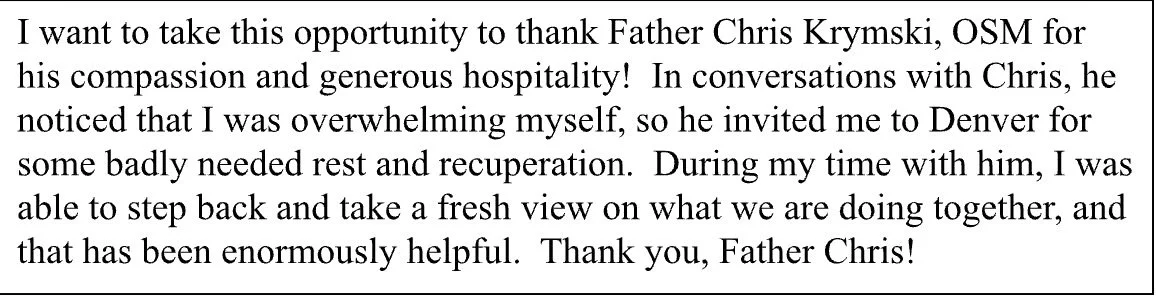
I hope you are a fan of archaeology like I am. I am fascinated by how our ancestors lived and how our present world has been shaped by their efforts in the past. I have been captivated most recently by church history, of all things!
Here’s what piqued my interest. When I was a child, the ‘Church’ I received was a massive and monolithic structure. All the important questions had been answered, and your job as a good Christian was to believe, Period! Questions were allowed, but only if they were asked humbly and with great respect.
Since retiring a couple of years ago, I have been able to catch up on recent research exploring the very beginnings of the Christian faith. As I have delved into these materials, I have found that the early church was anything but the monolithic structure I received as a child. In fact, there were very different understandings about what Jesus taught, radically different understandings of who Jesus was, and wild differences in how people responded to all of this.
For example, Jesus is often referred to as ‘Rabbi,’ which means teacher. That’s a pretty easy concept for all of us to grasp, since we have all had many different kinds of teachers. We know from our own experience what teachers are like. But in other places in the Bible, Jesus is the cosmic Logos – that great Being through whom “all things came to be,” as described in the gospel of John. Here are two very different understandings of who Jesus was and what he was about. One is simple and humble, the other is grand and cosmic. Which one is accurate?
Another anomaly. We have all heard of ‘Jesus of Nazareth,’ but I have never heard the phrase, ‘Jesus of Bethlehem.’ Yet, it’s my understanding that during Biblical times, people were called by their birthplace – for example, Saul of Tarsus. Is this an indication that Jesus wasn’t born in Bethlehem? Does this mean the narratives surrounding his birth – such as the journey to Bethlehem, being born in a manger, the shepherds receiving word of his birth from the angels, the three wise men from the East, the slaughter of the innocents, and the flight into Egypt – are all made-up stories?
And speaking of his birth, why do only two of the four canonical Gospels record the birth narratives? The stories in Matthew and Luke are cosmic in their significance. If you are trying to ‘sell’ a new religion, you certainly would want to marshal these stories as evidence. So why did Mark and John omit the birth narratives? What’s going on here?
As these questions arose, I began to wonder how the monolithic church that I received as a child came to be. And what happened to the wide variety of understandings about the teaching and person of Jesus that existed in the first 200 years after his death? In an attempt to answer these questions, I have decided to dig a little and explore what we know about the early church and its many different perspectives.
* * *
Let’s start with the immediate aftermath of Jesus’s execution and the very natural reaction of his followers to run and hide. Imagine what it was like for his disciples – they begin the week with the crowds in Jerusalem cheering them on, waving palm branches and welcoming Jesus into their city with “Hosannas” and shouts of joy. The crowd probably had a mix of expectations. Some of them expected Jesus to be the Messiah and to lead a rebellion to throw off their Roman overlords. Others expected some kind of religious revival, where the religion of the Jews would be purified, and the Jewish people would regain their favored position in God’s eyes.
Seven days later, however, the expectations of the crowds and Jesus’s disciples are in ruins. Jesus has been executed by the state as a criminal, and his disciples have fled or are in hiding in Jerusalem. The Jesus movement is completely disorganized and trembling in fear. Their revered leader is not there to guide them. What should they do?
Despite following their Rabbi, their teacher, for three years or so, the disciples are running in fear for their lives. The crowds, once so fervent in their adoration, have turned.
You can imagine the crowd’s disappointment, too. They had expected some massive triumph, but instead they got the worst possible outcome. The catalyst for their supposed triumph was arrested, tortured, and publicly executed. The crowds felt betrayed. So their disappointment turns to rage, and they actively look for this ‘charlatan’s’ disciples so that they can vent their anger.
In this chaotic situation, something vitally important is missing! It is so simple that we take it for granted, and as a result, it is invisible to us. It is simply this: none of the institutional tools we take for granted existed yet. There was no creed – no clear understanding of what it meant to be a follower of Jesus. The term, Christian, hadn’t been invented yet, so there wasn’t even a label for their group identity.
There were no scriptures. There was no organization, no church structure. There was nothing authoritative to go on, so there was no guidance whatsoever. Basically, these early followers of Jesus had to make up a church as they went forward.
* * *
What these early followers of Jesus had were memories of his teaching and his actions. It seems likely that some of these followers took notes when Jesus was teaching. But since these early followers tended to come from the lower levels of Jewish society, it seems likely that most were illiterate. The frequent mention of scribes in the New Testament indicates that these literate members of society were few in number and had a special place on the social ladder.
So, what would you do if you found yourself in this situation? Your entire world – all of your hopes and expectations – has utterly collapsed. You are now being hunted, and the crowd wants your blood. You are terrorized, so you do what feels right – you run and hide. If confronted by someone who recognizes you, like Peter, you deny any knowledge of this Jesus fellow. You are in fear for your life!
Some, like Peter and Jesus’s brother, James the Just, stayed in Jerusalem. After the uproar died down, they emerged and developed a school of Christianity that focused on tailoring the life and message of Jesus so that it fulfilled the messianic hopes of the Jews. Adherents of this school identified primarily as Jews and remained Torah–observant. In actual fact, it was not a single, monolithic school, but rather a cluster of related movements that were initially centered in Jerusalem and later scattered across Syria and Transjordan.
James the Just, the brother of Jesus, was the principal leader of the Jerusalem church. They emphasized observance of the Torah, including circumcision, the Sabbath, Jewish dietary laws, and reverence for the temple, before its destruction in 70 A.D. They saw Jesus as the Davidic Messiah and emphasized his humanness. They stressed Jesus’s ethical teaching, especially his Sermon on the Mount. According to the book of Acts, they practiced communal sharing and lived in poverty and simplicity. Authority was located in the “brother of the Lord,” James the Just.
After James died in 62 A.D., and after the temple was destroyed in 70 A.D., the group scattered and was marginalized. Jews tended to see them as just another reform group, and eventually came to see them as too Christian for Judaism. The Gentile Christians, on the other hand, came to see them as heretical because of their emphasis on the Torah and their focus on the humanity of Jesus. For these Christians, they were too Jewish for the emerging Catholic Christianity.
So what can we make of all this? In my view, it is crucial to realize that this Jewish Christianity was the original matrix of the Jesus movement. As nearly as we can tell from a divide of some 2000 years, this flavor of Christianity was as close to Jesus’s actual teaching as we can determine. The Pauline theology of faith and salvation by grace eventually supplanted this initial Jewish Christianity. What is more, we can start to see that the Pauline theology, so familiar to us today, was only one of many schools that developed after Jesus’s execution.
* * *
I think this is probably enough for this week. I suspect that many of you are hearing about these many different strands of ancient Christianity for the first time. I know, when I first heard about this, I was kind of stunned and then amazed. The monolithic church that I received as a child turns out not to be a monolith at all, and it certainly didn’t start out that way. The monolithic appearance results from the “winners” of these theological battles writing the history. As a result, they get a chance to tout their own views and smear their opponents, sometimes even erasing them from the record. While this is not how I would have preferred things to develop, it is, sadly, our all-too-human propensity – both in religious and political history.
Next week, we will continue our exploration into the development of the early church. As I have explored in this area, I am continually amazed at the differences between what I thought was true and what is actually true. It is helping me understand that our faith is far more complex than I realized
Once again, I want to encourage you to practice your meditation daily. In our spiritual efforts, consistency matters greatly. I would rather see you meditate for five or 10 minutes every day rather than one big 30-minute session followed by nothing for the rest of the week.
That’s all for now. Remember that you are blessed in every way, today and always!
With deep affection,
P.S. Several of you have expressed the desire for an online meditation class. If there is enough interest, I will try to figure out how to hold a group class on the web. If you have an interest, please write me atken123Kaisch@gmail.com.
P.P.S. Several of you have expressed the desire for an online meditation class. If there is enough interest, I will try to figure out how to hold a group class on the web. If you have an interest, please write me at ken123Kaisch@gmail.com.
Humility as a Tool → Letting go → Fear → Openness → Acceptance & Growth
If you are finding this newsletter course helpful, you may want to consider Dr. Kaisch's latest book, Inside the Invisible: The Universal Path to Spiritual Transcendence.👇