
Why This Exists
Most approaches to inner work fail for the same reason.
They ask you to believe something. Follow someone. Adopt a framework. Trust that the teacher knows something you don't, and that proximity to them will eventually get you there.
That's not what this is.
Inside the Invisible exists because the problem most people face isn't a lack of information or the wrong beliefs. It's a structural one. The system running your inner life, the one producing your thoughts, reactions, and that persistent sense of disconnection, has never been examined directly. It's been managed, medicated, journaled about, talked through.
But not seen.


What changes things isn't inspiration. It's not the right words at the right moment, or finding a teacher whose energy feels aligned with yours. What changes things is practice. Specific, repeatable, verifiable practice. The kind that produces results you can measure in your own experience, not outcomes you're told to believe in.
The traditions behind this work, Christian mysticism, depth psychology, contemplative practice across lineages, have been mapping the same territory for centuries. They disagreed on language and theology. They agreed on this: you cannot think your way into direct experience. You have to learn to locate yourself somewhere other than inside your own thoughts.
That's the work.
Not belief. Not belonging to something.
A system. Practiced consistently. Over time.
If that's what you're looking for, you're in the right place.
Ken Kaisch
Author | Thought Leader | Speaker
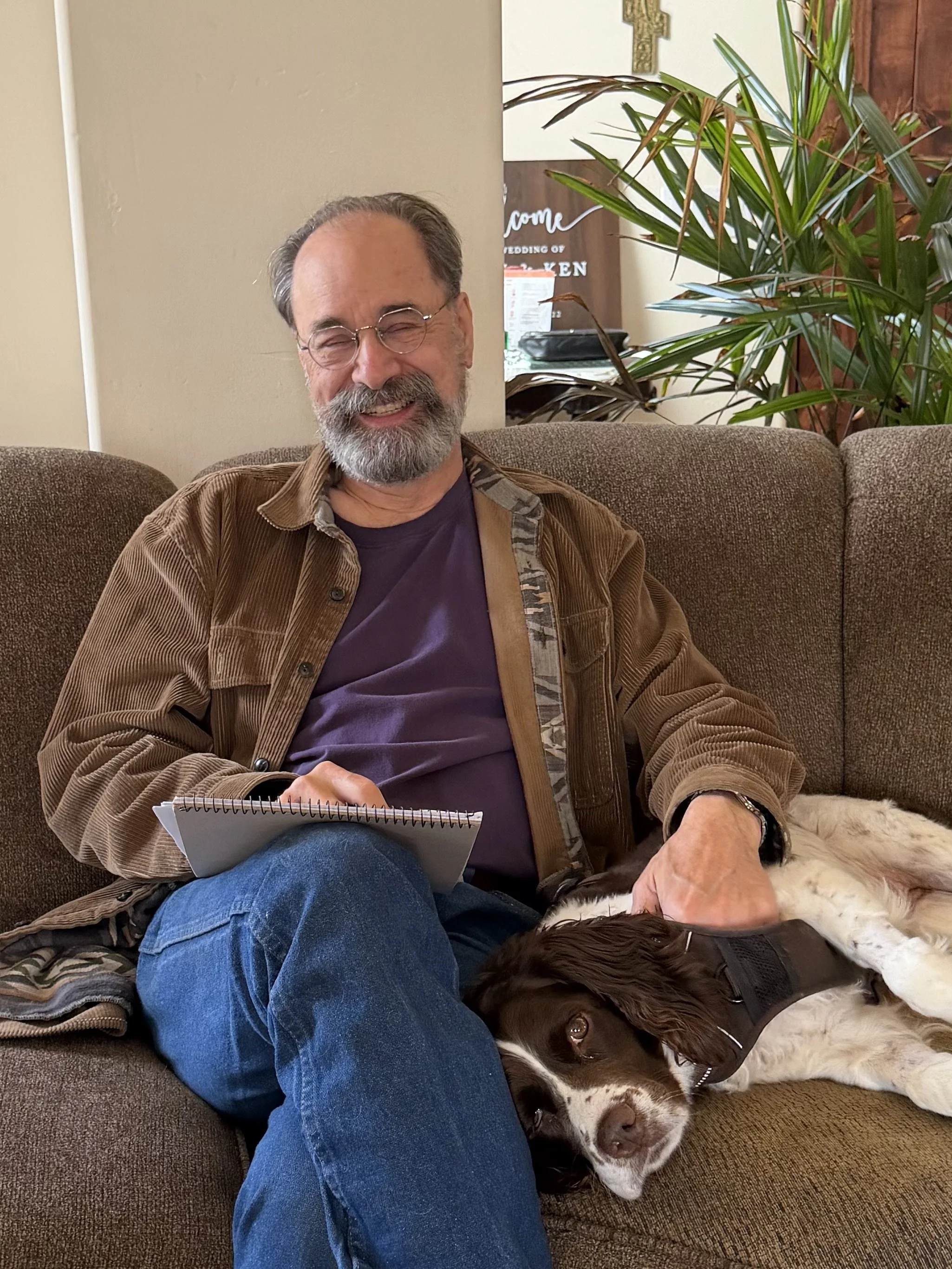
KENNETH KAISCH, Ph.D., M.Div.
Clinical Psychologist | Contemplative Teacher | Author
MY APPROACH
I combine:
50+ years of clinical psychology
Deep contemplative training (Christian, Buddhist, Hindu traditions)
Practical methods that shift you from thinking → direct experience
Focus:
Using attention and the body as access points
Stabilizing awareness (not chasing temporary states)
Distinguishing real insight from dissociation or illusion
EXPERIENCE
Retired Clinical Psychologist (Licensed, California)
1988–2024
50+ years in psychotherapy and assessment
Specialized in anxiety, trauma, and identity issues
Forensic Psychology
2010–2023
Expert witness in federal immigration court
Psychological evaluations for legal cases
Contemplative Teacher & Founder
Founder, OneHeart
Founder, Contemplative Visions
Organizer of ecumenical and interfaith contemplative conferences
Episcopal Priest
Ordained priest with decades of teaching and pastoral experience
AUTHOR
Inside the Invisible: The Universal Path to Spiritual Transcendence (2025)
A practical framework for moving from mental noise into direct experience
Hit It With Your Best Shot: How to Play Golf in the Zone (2000)
Applying spiritual technology to sports
Finding God: A Handbook of Christian Meditation (1994)
A developmental approach to Christian Meditation

WHAT I DO
Most people live almost entirely in their head, overthinking, disconnected, and performing their way through life.
I teach you how to step out of that and into a direct, felt experience of yourself, so your life starts to feel real again.
AUTHORITY
I’ve spent 50+ years working with people who are anxious, fragmented, or searching, and I know exactly where most approaches fail.
THE FASTEST SHIFT PEOPLE EXPERIENCE
You stop living in your head and start experiencing yourself directly in your body (what contemplative traditions call the “heart”).
As a result:
You feel more grounded and less anxious
You’re less guarded in conversations
Your interactions become more real, less performative
WHAT PROBLEM THIS SOLVES
Constant overthinking and mental noise
A low-grade sense that something is missing
Disconnection from yourself and others
Spiritual ideas that don’t change your actual experience

WHAT MAKES THIS DIFFERENT
Most approaches:
Stay conceptual
Produce temporary experiences
Ignore psychological risks
My work:
Produces stable, repeatable shifts
Integrates psychology with contemplative practice
Focuses on lived experience, not concepts or belief
EDUCATION
Ph.D., Clinical Psychology – Utah State University
M.S., Counseling Psychology – Utah State University
M.Div. Ministry & Theology – Church Divinity School of the Pacific
B.A., Philosophy & Religion – San Francisco State University
CREDENTIALS
Retired Psychologist, California (License # PSY10635)
Diplomate, Clinical Psychology
Diplomate, Sports Psychology
START HERE
If you want to move from thinking about your life
to actually experiencing it: subscribe of our free weekly email newsletter https://insidetheinvisible.beehiiv.com/subscribe
Stop thinking about your life.
Start experiencing it.
Q&A with Father Ken
-
Not even a little bit. Some of the most spiritually alive people I know want nothing to do with organized religion, and I completely understand why. The institutional church has done a lot of harm—exclusion, judgment, abuse of power. That's real, and those wounds don't just disappear because someone says "but we're the good ones."
What we're exploring here isn't about institutions. It's about direct experience. Can you learn to be present with yourself? Can you touch something real beneath the stories and performances? That's not a religious question—it's a human one.
-
Define "nothing." If you're expecting fireworks and mystical visions, you might be disappointed. Most of this work is subtle. You might not notice anything dramatic in the moment.
But then one day you realize you're not as reactive as you used to be. Or you can sit with anxiety without needing to immediately distract yourself. Or you feel genuinely connected to someone instead of just performing connection. That's not nothing—that's everything.
Also, sometimes nothing does happen, and that's valuable information too. Maybe the method isn't right for you. Maybe the timing's off. There's no failure here, only exploration.
-
As much or as little as you want to give it. You can spend five minutes a day with a simple breathing practice. You can go deep and spend hours in meditation. Most people find something in between.
The question isn't really about time—it's about consistency and sincerity. Five sincere minutes matter more than an hour of going through the motions.
-
Because I've spent 70+ years exploring this territory, and I've found something real. Not perfect understanding—I'm still learning—but something genuine beneath all the noise and performance.
I've seen what happens when people connect with that reality. They suffer less. They're kinder. They stop needing to prove themselves constantly. They find peace that doesn't depend on circumstances.
If I can help point others toward that possibility, why wouldn't I? We're all fumbling around in the dark together. If I've found a flashlight, it seems like the right thing to share it.
-
Inside the Invisible is not a religion, not a church, and not trying to become one. We're not asking you to convert to anything, join anything officially, or adopt a new set of beliefs. We're a learning community and practice space for people exploring contemplative spirituality.
-
I am—Episcopal priest, ordained in 1976. But yeah, you're right, this probably doesn't feel like what you'd expect from church. I spent nine years doing parish ministry, and what I learned is that the formal structures of religion often get in the way of the actual experience they're supposed to point toward.
The liturgy, the doctrines, the rules—those are all meant to be fingers pointing at the moon. But somewhere along the way, we started worshiping the finger instead of looking at what it's pointing to. Inside the Invisible is about trying to look at the moon directly.
-
I’ve worked as a clinical psychologist for over 45 years. And honestly, I don't see a conflict. Psychology helps us understand how our minds work—our defense mechanisms, our patterns, our trauma responses. Spirituality addresses what's underneath all of that.
Good therapy gets you to a place where you can function. But there's often still this question of "okay, but what's it all for?" That's where the spiritual work comes in. They're complementary, not contradictory.
-
Looking within doesn't mean obsessing over your thoughts or getting lost in self-analysis. It means learning to be present with what's actually happening inside you—your sensations, your emotions, your patterns—without immediately judging or trying to fix them.
Most of us live entirely in our heads, running from anything uncomfortable. We're either ruminating about the past or anxious about the future. We're rarely actually here. Learning to be present with yourself, without all the commentary, is the foundation for everything else.
-
Honestly? I don't know where it leads for you specifically. The mystics talk about union with the Divine, about non-dual awareness, about the dissolution of the separate self. And yeah, those are real possibilities.
But for most people, most of the time, the work is simpler and more immediate: learning to be present, developing compassion for yourself and others, finding some peace amid the chaos, connecting with what's real instead of what's performed.
If you get to mystical union, great. If you just become a little less of an asshole to yourself and others, that's also great. Both matter.