
Scroll Down For More
Inside the Invisible
A structured path through the inner life. Built on 40 years of research across six contemplative traditions.
Something feels off.
Not wrong exactly. Just hollow. You're in a room full of people, or scrolling through your feed, or sitting with your own thoughts, and there's this low-grade awareness that you're performing a version of yourself rather than actually being yourself.
You're not imagining it.
The structures that used to give people meaning have either collapsed or revealed themselves to be performances too. What's left is noise. Everyone claiming to have answers. Nobody actually present.
And underneath all of it, there's an ache. For something real. For quiet that isn't just distraction. For meaning that doesn't come with a sales pitch attached.
You've tried enough things to know the problem isn't effort.
You've read the books. Done the therapy. Sat in the rooms. You've had moments of clarity that didn't stick. You've outgrown the answers you were given and haven't found new ones.
That's not a character flaw. That's fragmentation. And it's structural.
Most approaches manage the problem.
We work at the level where it lives.
The contemplative traditions, Christian mystics, Buddhist practitioners, Sufi masters, Jewish depth teachers, spent centuries mapping the inner life with precision. They disagreed on theology. They agreed on the territory.
Their unanimous finding: you cannot think your way into a different experience of being alive. You can only practice your way there.
The problem isn't your beliefs. It's the system running underneath them. The patterns that fire before you have a choice. The reactions you keep having even when you know better. The gap between who you intend to be and who you actually are under pressure.
That gap is where this program works.
What This Site Is For
Inside the Invisible is a research-grounded curriculum in contemplative spiritual development. It exists to teach one thing: a practical, sequential path from where you are now to direct, lived contact with the reality every major spiritual tradition points toward.
Not a philosophy. Not a set of beliefs to adopt. A path - specific practices, in a specific order, each building the ground the next one requires.
The Path It Takes
The curriculum moves through a sequence of stages. Each one has a clear entry condition, a specific practice, and a gate - some evidence that the work of that stage has actually taken hold - before you move to the next.
It begins with the ground: interrupting the self-centered behaviors that fragment attention and block everything that follows. It moves inward, to the interior contradictions driving those behaviors. From there, it builds sustained concentration - the engine that makes deeper contemplative states possible at all. What comes after is the territory every tradition in this research describes but few maps in practical, sequential detail: absorption, the dissolution of the separate self, and the direct, unmediated contact with the Divine that is the actual destination of this work.
You do not skip stages. You do not rush them. Each one is real work, and each one is necessary for what follows to be possible.
Six Traditions, One Territory
This curriculum did not begin as theology. It began as research - a systematic comparison of the actual practices and stages described by contemplatives across six of the world's major religious traditions: Christian, Buddhist, Hindu, Jewish, Muslim, and Daoist.
The theological differences between these traditions are real and significant. But when you compare what their contemplatives actually did - the practices, the sequencing, the markers of progress, the descriptions of what arose at each stage - a different picture emerges. The behaviors converge. The sequence converges. Independently, across centuries and continents, with no contact between them, these traditions arrived at strikingly similar maps of the same interior territory.
- Christian - Teresa of Ávila's interior mansions, the Jesus Prayer, Centering Prayer, the progression from active recollection to the Prayer of Quiet
- Buddhist - Sila, samadhi, and prajna; the jhanas; the systematic training of concentration as the vital link to the higher stages
- Hindu - Patanjali's eight limbs, beginning with the behavioral restraints (yama) and moving through concentration (dharana) to absorption (samadhi)
- Jewish - Kavanah, the directed heart; the commandments as behavioral architecture for the soul's orientation toward God
- Muslim - The Sufi path from tawba through zuhd to fana, the dissolution of the separate self in the Divine
- Daoist - The stilling of the mind, the letting go of projected reality, the return to the uncarved block
Different languages. Different theological commitments. The same underlying architecture. That convergence is the foundation this curriculum is built on. Where the traditions agree, we teach it as structural - not as belief, but as what actually seems to work, verified across six independent lines of human experience.
How It's Built
Foundation - Stages 1 through 5
Open to everyone. No application required. Self-paced. Stage 1 is Free + Stage 2 and following are $10/month.
This is where you learn to slow down, open your attention, and begin developing the behavioral coherence that makes deeper work possible. Most programs skip this and wonder why nothing sticks. We don't skip it.
Advanced Work - Stages 6 through 16
Requires written application, personal spiritual history, and psychological screening.
Not gatekeeping, safety. The practices here are designed to disrupt your relationship with your ego. That is not a comfortable process. Not everyone is ready for it, and the wrong timing can cause more harm than good. We take that seriously.
Community
Regular Zoom sessions for group spiritual direction, open conversation, and Q&A.
You will almost certainly find that the people doing this work are the most honest room you've been in for a while.
What This Will Cost You
$10 a month through Stage 5. About 33 cents a day. Stage 6 requires additional fees for retreats and pilgrimages.
This knowledge was given to me freely over 40 years. I believe it should be free. It isn't, entirely, because servers and designers and legal costs are real. We are not in this to profit. We are here to serve you.
1
Money
Reading. Learning. Practicing. The course is self-paced. The practices are not optional, they are the point. If you're not going to practice, this isn't for you.
2
Time
This is the real cost. If you follow this program through, you will not recognize yourself at the end. Every tradition that has mapped this path agrees: the self you think you are is not what you actually are. Finding out what's underneath that is the work.
Some people find this liberating. Some find it destabilizing. It is honest, either way.
3
Your sense of self

This is for you if:
You've outgrown the answers you were given and aren't sure what comes next.
You're done with spiritual platitudes and want actual practices.
You want direct experience, not more beliefs to carry around.
You're willing to be uncomfortable in service of what's true.
You can tolerate not-knowing long enough to find out.
This is not for you if:
You want quick fixes or guaranteed outcomes.
You need constant reassurance and positive feedback.
You're not willing to question your assumptions about yourself and reality.
You're dealing with serious untreated mental health issues. Get stable first. Come back when you are.
Where this came from
In 1981, I started a master's thesis comparing the stages of spiritual growth across the world's major religions … Hinduism, Buddhism, Judaism, Christianity, Islam, Daoism. I wanted to know whether there was a common pathway beneath the different languages and rituals.
There was.
I spent the next four decades in clinical psychology practice, in contemplative community, and in ongoing research, refining that map, testing it against direct experience, and learning from teachers who had actually traveled the territory. Through my mentor, Dr. Ronald Wong Jue, I met many of the contemplative figures of our generation. Each showed me what it looks like to actually live this work, not just describe it.
In 2020 I started writing down everything I'd learned, before I died with it. That became the book Inside the Invisible. This program is its structured application.
This is a new program. There are no testimonials yet. What I can offer is the research, the map, and four decades of helping people navigate this territory without the worst detours.
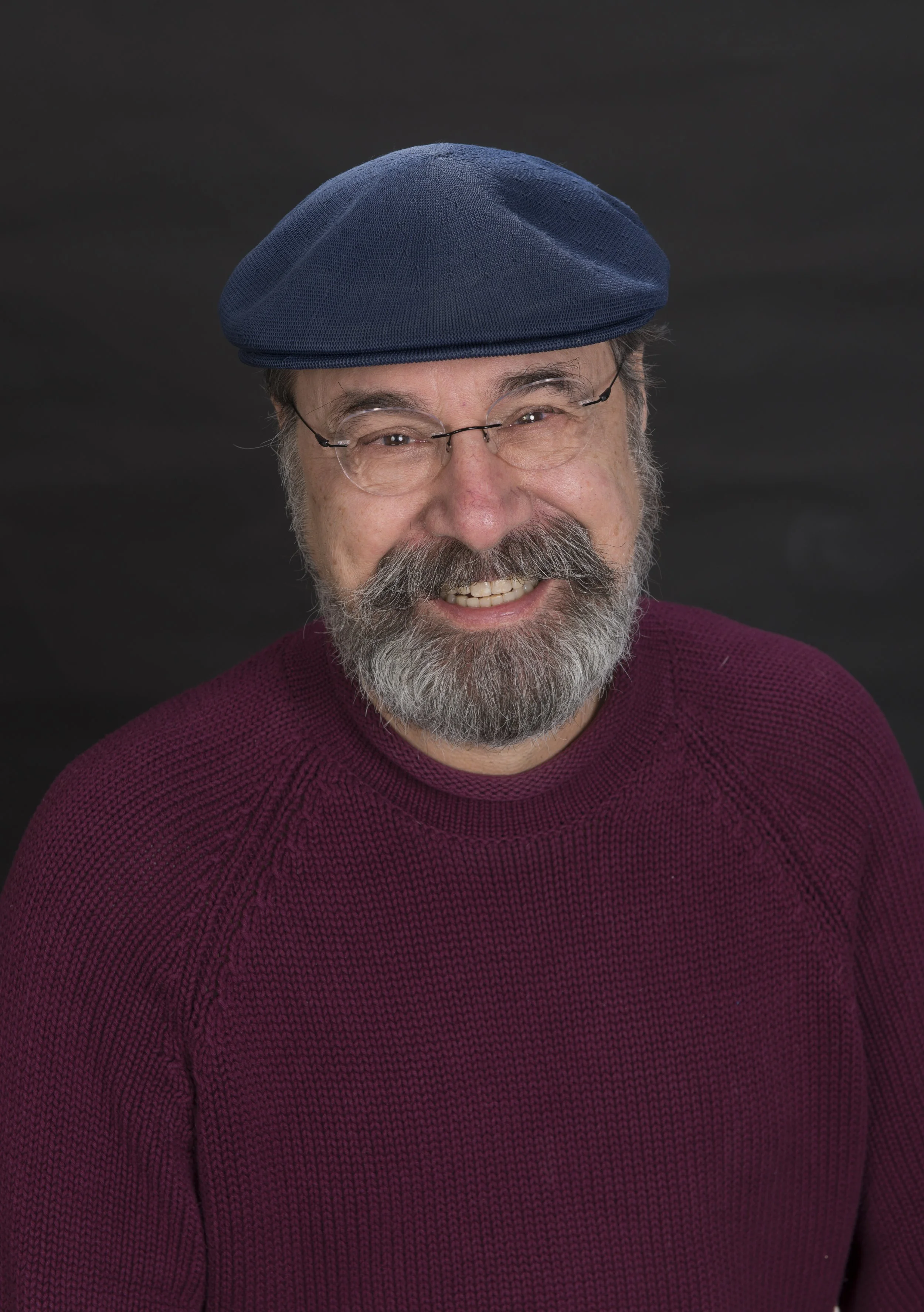
Ken Kaisch, Instructor
Episcopal priest, ordained 1976. PhD in clinical psychology, Utah State University, 1986. Fifty years of clinical practice. Founder of OneHeart, a nondenominational contemplative organization active across Southern California through the 1990s.
Named a spiritual elder by Rabbi Zalman Schachter-Shalomi at 40, with a charge to transmit what I'd learned. I'm still working on it.
My qualifications
What I'm NOT
Enlightened. I don't pretend to have reached the end of the path. I am further along than many and have spent decades figuring out how to help others navigate this terrain without the detours that cost years.
Start here.
The newsletter is free.
It will give you an accurate sense of whether this is for you.
Ready to go deeper? Spots are LIMITED, please sign up to join the full program - $10/month
No pressure. No conversion tactics. Just an honest invitation to look at what's real.